


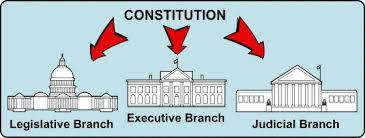
The Federal Government is the national government of a country that exercises power and authority over the entire nation. In the United States, the Federal Government is divided into three branches: the legislative, executive, and judicial branches.


The legislative branch, also known as Congress, is responsible for making laws. It is composed of two chambers, the House of Representatives and the Senate, with each state having representation based on its population. The legislative branch has the power to propose and pass laws, levy taxes, declare war, and regulate interstate commerce.
The executive branch is led by the President of the United States, who is elected by the citizens every four years. The President is responsible for enforcing laws, managing the federal bureaucracy, and representing the country both domestically and internationally. The executive branch also includes various departments and agencies, such as the Department of Defense and the Environmental Protection Agency, which are responsible for administering and implementing policies and programs.
The judicial branch is headed by the Supreme Court, which is the highest court in the land. The Supreme Court is responsible for interpreting the Constitution and ensuring that federal laws comply with it. It has the power to settle disputes between states and hear appeals from lower courts. The judicial branch also includes other federal courts, such as district courts and appellate courts, which handle a range of cases.
The Federal Government has various powers and responsibilities, including protecting national security, managing the economy, providing public goods and services, and promoting the general welfare. It is also responsible for maintaining a system of checks and balances, which ensures that no single branch of government becomes too powerful. For example, the President can veto legislation passed by Congress, but Congress can override the veto with a two-thirds majority vote.
The Federal Government also collects taxes from citizens and businesses to fund its activities. Taxes are used to finance infrastructure projects, social welfare programs, defense expenditures, and other government services. The government also regulates various industries and sectors of the economy to protect consumers, ensure fair competition, and promote public safety.
In conclusion, the Federal Government plays a crucial role in governing the United States. It is responsible for making laws, enforcing them, and ensuring their constitutionality. Through its three branches, the Federal Government provides essential services, protects national interests, and promotes the well-being of its citizens.