


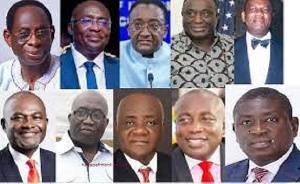
The Super Delegates Congress of the New Patriotic Party is now in session around the nation.
Before the party's conference this November, the NPP is attempting to reduce the field of candidates from 10 to 5.
The ten candidates are:
Alan Kyerematen, Dr. Owusu Afriyie Akoto, Kennedy Agyapong, Joe Ghartey, Kwabena Agyei Agyepong, a former party general secretary, Kwadwo Poku, an energy expert named Boakye Agyarko, Kofi Konadu Apraku, Francis Addai Nimoh, and a former representative for Mampong are some of the former cabinet members.
Vice President Dr. Mahamudu Bawumia
There will be 900 delegates present for the countrywide election.
The top five candidates who receive the most votes will participate in the NPP's primary in November for the position of party flagbearer for the general election in 2024.
The NPP is currently in power in Ghana, and the primary victor will be the favorite to succeed President Nana Akufo-Addo, who is ineligible to serve a third term under the constitution.
The competition is expected to be fierce, with Alan Kyerematen and Dr. Bawumia being the front-runners. But it's interesting to note that Kennedy Agyapong has been gaining support lately and could end up becoming a surprise contender.
The upcoming election is an opportunity to
The upcoming election will be a litmus test for the NPP because the results will determine how well the party does in the national elections in 2024.
The party must select a candidate who can bring the party together and win over a wide range of people.
Have you ever wondered how the outcome of an election is determined? Ghana employs certain methods and rules of counting votes to ensure transparency and credibility of the polls.
Independence of Commission
Article 46 of the 1992 constitution provides that” in the performance of its functions, the Electoral Commission shall not be subject to the control or direction of any authority” except as provided in the constitution or any other law not inconsistent with the constitution.
The Chairman and the two Deputy Chairmen have permanent tenure of office and enjoy the same conditions of service as justices of the Superior C ourts.