



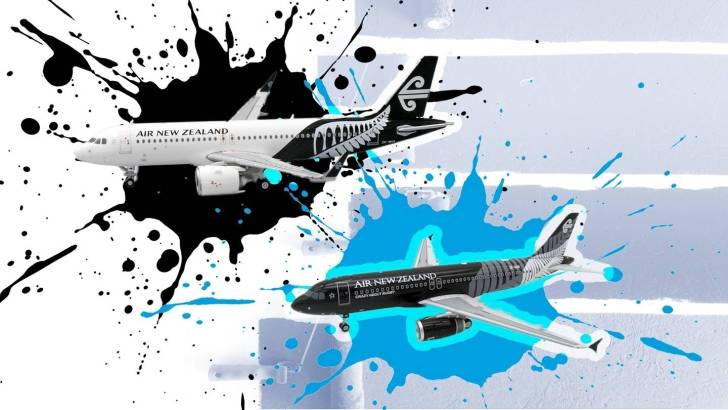
You have a choice, a white plane or a black plane. Which goes faster?
This might seem like a trivial question but, passing through any airport in the world, 99 per cent of the aircraft you encounter will be one colour. Planes are almost always painted white. Like anything in aeronautical engineering, this does not happen by accident.
Quite why has long been a topic of speculation. Reasons for giving planes a lighter shade of paint range from weight to visibility. According to the speculations of comedians Joe Lycett and James Acaster it might be that “black planes are evil”.
The reason is not witchcraft, but owes more to the dark arts of accounting and chemical engineering.
According to Boeing aerospace the layers of paint on a passenger jet can add between 273 to 544kg to an aircraft. The difference between painting a plane or not can add the equivalent of eight additional passengers. Additional colours add weight, therefore decreasing efficiency and immediate cost of running the aircraft. But which colour makes for the most efficient plane?
One aviation paint expert weighed into the argument that maybe black was a better choice for airplanes.
“White paint is one of the heaviest paints out there,” says Samuel Cowlishaw, marketing manager for the wholesale paint specialists.
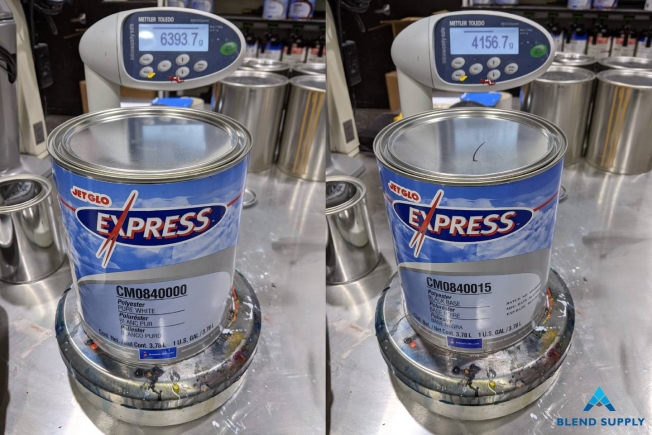
A can of white aviation paint is an additional 53 per cent heavier than black, 6393.7g vs 4156.7g per standard 3.78 litre can.
According to Cowlishaw of Blend Supply, the large volume of metal oxides needed for white pigment means that, coat for coat, black planes are more fuel efficient.
Contrary to the vast number of white aircraft, he says black planes are lighter than white ones.
“In the grand scheme of things there’s not a big difference really, but it is a slight difference due to the ingredients in white vs black paint,” he told the Herald.
This is obviously good news for Air New Zealand, whose black livery marks it out as unique in the world. But why aren’t there more black planes in the sky?
Repainting a fleet black might be more hassle, and expense, than the operation is worth.
White paint is a lot cheaper and more readily available, says Cowlishaw “because painters usually buy it in such bulk quantities, and manufacturers make bigger batches”.
When painting an aircraft the difference between the colours applied is minimal, as all aircraft need additional coats of primer and topcoat to give planes their smooth aerodynamic sheen.
“Ultimately there are lots of other factors that impact fuel efficiency, such as weight of cargo, et cetera.”
So why is Air New Zealand the exception rather than the rule?
Why does Air New Zealand fly black planes?
Since 2007 Air New Zealand has been uniquely suited to answering the question of which planes are more efficient, white or black.
As part of promotion for the Rugby World Cup in France it took delivery of an “All Black” Boeing 777 ZK-OKH. Since then it has been a tradition to have at least one of every aircraft type in the fleet painted in the inverted black on white livery.
Air NZ’s A321neo ZK-OYB turned heads in August 2022, as the first completely black star alliance plane.
This has made them the only airline in the world to fly both white and black models of the same aircraft and the perfect test case for the question: why white or black?
According to a spokesperson for the airlines there is no noticeable difference in handling or efficiency between white or black aircraft.
Ultimately the main role of paint is to protect the aircraft it is coating. So why not paint it black, says Air New Zealand’s chief transformation and alliances officer Michael Williams.
“Black is an iconic Kiwi colour,” said Williams on receipt of ZK-OYB.
“From sports jerseys to gumboots, black is embedded in New Zealand’s national identity and worn with pride.”
It’s a mark of distinction for Air New Zealand. This doesn’t mean there aren’t plenty of other reasons for painting planes white.

White paint cools planes and increases resistance to radiation
The use of white paints with high metal oxides content helps protect aircraft.
The main reason why aircraft are painted white or light colours is to reflect sunlight and minimise both the heat and any potential damage from solar radiation. According to the CDC during a 3 hour flight passengers are exposed to 3.5 mrem of cosmic radiation, about the same as a chest x-ray.
The high levels of UV radiation from flying at altitude is a consideration that all colour schemes must make. Recently it was discovered that the primer used on Boeing’s 787 Dreamliners had an embarrassing issue peeling under high exposure to the sunlight. The aircraft manufacturers applied to the FAA to recall aircraft to apply ultraviolet-blocking topcoats to the defective paint jobs. Until then airlines had to use speed tape to address the issue of flakey planes.
“Even though the use of speed tape has no effect on the safety of the airplane, the public could perceive an unsafe condition when seeing tape on the wing surfaces,” said Beoing.
White paint also reflects heat away from the aircraft. In 1996 it was discovered that a blue paint job on an Air France Concorde for Pepsi Cola was prone to overheating. It could only fly at Mach 2 for short 20 minute bursts, or risk burning up.

White paint reduces operating costs
A full white livery on a Boeing 777 is the equivalent to 544kg added weight. According to the Telegraph Travel that’s the equivalent of adding more than an extra row of passengers to the aircraft.
After World War II it was not uncommon for airlines to fly unpainted aircraft, polishing the exterior to a fine chrome. American Airlines flew ‘silver birds’ until 2013. Changes to the fleet meant that most aircraft no longer had an aluminium body. The option of adding metallic-effect paint was ruled out as too costly and heavy. They went with the patriotic, yet predictable red, blue on white livery.
The new white colour scheme was developed for AA to be applied without a mica primer. The airline said this saved them 300,000 gallons(1,135,000 litres) of fuel a year.
The minimal cost of fuel saved by flying without any paint is cancelled out by the greatly reduced lifespan and repair costs of naked metal planes.
While it might weigh more and be more expensive to apply, the low-fuss white coating protects the airplane.
“The savings are more than offset by the higher cost of washing, polishing and painting a polished fuselage,” Boeing told the Telegraph .
Paint is a relatively cheap way to protect the integrity of the fuselage and airframe.
No comments yet
Be the first to share your thoughts!