



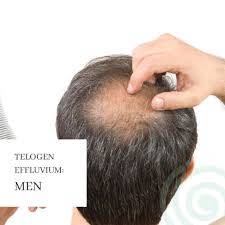
 Telogen Effluvium
Telogen effluvium is a type of temporary hair loss that occurs when a large number of hair follicles enter the resting (telogen) phase of the hair growth cycle prematurely. This results in noticeable shedding of hair, usually a few months after a triggering event.
---
Causes
Telogen effluvium is often triggered by significant changes or stressors on the body, such as:
1. Physical Stress:
Surgery: Major surgeries, especially those involving general anesthesia, can trigger hair loss.
Illness: Serious infections, fever, or chronic diseases can cause hair to shed.
Trauma: Physical injuries or accidents.

2. Emotional Stress:
Severe emotional shock or stress, such as grief, anxiety, or trauma, can disrupt the hair growth cycle.
3. Hormonal Changes:
Pregnancy and Childbirth: After childbirth, a drop in estrogen levels can trigger hair shedding.
Menopause: Hormonal fluctuations during menopause can contribute to hair thinning.
Thyroid disorders: Both hypothyroidism and hyperthyroidism can trigger telogen effluvium.
4. Medications:
Chemotherapy: Cancer treatments often lead to hair loss.
Antidepressants, blood thinners, or certain high-dose vitamin A: Some medications can cause temporary hair loss.
5. Nutritional Deficiencies:
Lack of nutrients, especially iron, zinc, vitamin D, or protein, can cause hair shedding.

6. Infections:
Fungal or viral infections that affect the scalp, such as COVID-19, can lead to telogen effluvium.
7. Dietary and Lifestyle Factors:
Crash diets or extreme weight loss: Sudden weight loss or malnutrition can result in hair shedding.
---
Signs and Symptoms
1. Excessive Hair Shedding:
Noticeable shedding when brushing, washing, or running fingers through the hair.
2. Thinning or Patchy Hair:
Hair thinning is more generalized across the scalp, rather than in patches.
3. Increased Hair Fall (2-3 months post-trigger):
Hair loss typically becomes noticeable 2 to 3 months after the stressor or trigger.
4. Fullness of Hair Decreases:
There may be a visible reduction in hair volume, with the scalp becoming more visible.
---
Effects
1. Emotional Impact:
Stress and Anxiety: The condition can cause frustration, anxiety, and a drop in self-esteem, especially with the sudden onset of visible hair thinning.
2. Temporary Hair Thinning:
While it leads to noticeable shedding, telogen effluvium does not usually result in complete baldness. Most people will experience a regrowth of hair after the triggering event is addressed.
3. Prolonged Recovery:
Regrowth can take several months (usually 6-12 months) after the cause has been resolved, but the condition may also reoccur with further stress or triggers.
---
Prevention and Solutions
Prevention
1. Manage Stress:
Regular relaxation techniques like meditation, yoga, exercise, and proper sleep can help prevent emotional and physical stress from affecting hair growth.
2. Avoid Crash Diets:
Gradual weight loss and a well-balanced diet rich in vitamins and minerals can help maintain healthy hair.
3. Monitor Medication Side Effects:
If medications are causing hair loss, consult with a doctor for alternatives or adjustments.
4. Maintain a Healthy Diet:
Ensure adequate intake of nutrients, particularly iron, protein, zinc, and vitamins (B-complex, vitamin D).
5. Prevent or Treat Underlying Medical Conditions:
Proper treatment of thyroid disorders, infections, or chronic conditions can help reduce the risk of telogen effluvium.
Solutions and Treatments
1. Minoxidil (Rogaine):
Topical minoxidil may help promote hair regrowth and speed up the recovery process.
2. Nutritional Supplements:
Supplementing with iron, zinc, vitamin D, and biotin may support hair health and regrowth.
3. Corticosteroids:
If telogen effluvium is linked to an inflammatory condition, corticosteroid treatment might help reduce inflammation and aid in regrowth.
4. Scalp Massage:
Gentle massaging of the scalp can improve blood circulation to the hair follicles and potentially support regrowth.
5. Hair Care Products:
Using gentle, nourishing shampoos and conditioners designed to support hair health can prevent further breakage and protect hair during regrowth.
When to See a Doctor
If hair loss is severe, continues for more than 6 months, or if there are other unusual symptoms (such as pain or redness in the scalp), it's essential to consult a dermatologist to rule out other causes or identify underlying health conditions.
---
While telogen effluvium is usually a temporary condition, addressing the root cause, managing stress, and supporting overall health can help speed up recovery and minimize further hair loss.
No comments yet
Be the first to share your thoughts!