


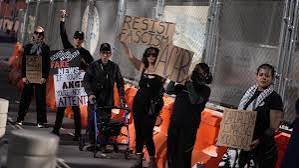
Introduction
Economic boycotts have long been a powerful tool for social and political change. Throughout history, communities and organizations have leveraged boycotts to challenge oppressive systems, protest corporate malpractices, and demand policy changes. The concept of an economic blackout—a coordinated effort to withdraw financial support from businesses or industries—has gained traction in recent years, particularly in response to economic injustice, political oppression, and corporate irresponsibility.

This article explores the dynamics of economic boycotts, their effectiveness, historical examples, and how individuals and organizations can participate in or organize economic blackouts to drive meaningful change.
What is an Economic Boycott?
An economic boycott is a form of protest where individuals, groups, or entire communities refuse to buy, use, or support products and services from a particular business, industry, or country. The goal is to exert financial pressure on the target entity to bring about policy changes, ethical improvements, or justice in social matters.
A more extreme form of a boycott is an economic blackout, where a community completely halts economic activity for a period—refusing to buy anything, use banking services, or engage in commerce to send a powerful message to those in power.
Types of Economic Boycotts
Consumer Boycotts – Refusal to purchase products or services from a company due to unethical practices.
Investor Boycotts – Divesting from companies that engage in unethical or harmful activities.
Labor Boycotts – Workers refusing to engage in production or services to protest unfair labor conditions.
International Boycotts – Countries refusing to trade with or impose sanctions on a nation to protest its policies.
The Power of Economic Boycotts: Why They Work
Economic boycotts are effective because businesses and governments rely on public spending to function. When large numbers of consumers stop supporting a business, revenue declines, forcing decision-makers to address the concerns of protesters.
Psychological and Economic Pressure
Boycotts create both a financial and reputational crisis for the targeted entity. Companies often fear losing customer trust and long-term brand loyalty.
Mobilizing Public Opinion
Boycotts draw attention to important issues, often leading to media coverage, social media engagement, and widespread awareness.
Historical Success Stories
Montgomery Bus Boycott (1955-1956) – A successful boycott against racial segregation in the U.S., led by civil rights activists.
South Africa Apartheid Boycott – International sanctions and trade restrictions helped end apartheid.
Nestle Boycott (1977-present) – Protest against the company’s unethical marketing of baby formula in developing countries.
Nike Sweatshop Boycott (1990s) – Forced the company to improve working conditions.
Modern-Day Economic Blackouts and Their Impact
In the digital era, economic blackouts are increasingly effective due to the speed of information sharing. Some recent examples include:
Blackout Tuesday (2020) – A social media movement supporting racial justice, where many businesses and consumers refrained from economic activities.
Amazon Prime Day Boycotts – Protests against labor exploitation and monopolistic practices.
#BoycottDisney, #BoycottNetflix Movements – Criticism of corporate decisions regarding representation and policies.
Social Media’s Role in Modern Boycotts
Platforms like Twitter, Facebook, and Instagram amplify boycott movements, making them more visible and impactful. Hashtags, viral videos, and online petitions play a crucial role in mobilizing participants.
How to Organize an Effective Economic Boycott or Blackout
If you’re considering organizing or participating in an economic blackout, follow these steps for maximum impact:
1. Identify the Cause and Target
Clearly define the issue and choose a specific company, industry, or government policy to target.
2. Build a Community
Gather like-minded individuals and organizations. Social media groups, petitions, and influencers can help spread the message.
3. Create a Clear Action Plan
Decide on the boycott’s duration, scope, and objectives. Will it be a one-day blackout or a long-term campaign?
4. Spread Awareness
Use social media, news outlets, and word-of-mouth to inform people. Hashtags and viral content increase participation.
5. Monitor and Adapt
Track the impact of the boycott using financial reports, media coverage, and public responses. If necessary, adjust the strategy.
6. Follow Up with Alternative Solutions
Encourage consumers to support ethical businesses that align with the movement’s values.
Challenges and Criticism of Economic Boycotts
Despite their potential for impact, economic blackouts face several challenges:
Sustained Participation – Many people struggle to maintain a boycott over time, especially if alternative options are limited.
Counter-Strategies by Corporations – Some businesses respond with rebranding, PR campaigns, or price reductions to mitigate losses.
Government Interference – In some cases, authorities may impose legal restrictions on boycotts.
Ethical Considerations
While boycotts aim for justice, they may also unintentionally harm workers, small businesses, or local economies. Organizers must ensure their actions do not disproportionately impact marginalized communities.
Conclusion: The Future of Economic Boycotts and Blackouts
Economic boycotts and blackouts remain powerful tools for societal change. With the rise of digital activism and global connectivity, their effectiveness continues to grow. However, successful boycotts require clear goals, strategic planning, and mass participation.
By understanding the mechanics of economic boycotts and blackouts, individuals and communities can leverage their collective power to challenge injustices, demand accountability, and create a fairer economic system.
Final Thoughts
Have you ever participated in an economic boycott? Share your experiences in the comments and let’s discuss how we can use economic activism to shape a better future.