


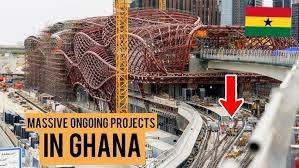
Massive Infrastructural Development in Ghana's Eastern Region: A Transformative Journey

Ghana's Eastern Region is undergoing a significant transformation, thanks to the government's dedicated efforts to improve infrastructure and enhance the quality of life for residents. Since 2017, the government has made remarkable strides in road construction, educational development, and technological advancement across the region. With over 1,859 kilometers of roads completed and more than 400 educational facilities built, the Eastern Region is poised for unprecedented growth.
Strategic Infrastructure Investment: Boosting Connectivity and Mobility
One of the most impactful areas of development in the Eastern Region has been road infrastructure. Prior to 2017, many communities in the region faced severe challenges due to poor road conditions. These conditions negatively affected trade, agriculture, education, and healthcare access. However, recent investments have changed this narrative.
The completion of over 1,859 kilometers of roads, including major highways and feeder roads, has improved accessibility across the region. Key routes connecting towns like Koforidua, Nkawkaw, and Akim Oda have been upgraded, reducing travel time and transportation costs. This has had a ripple effect on economic activities, particularly in agriculture, where farmers can now transport their produce to market centers faster and in better condition.
Improved road networks have also enhanced mobility for students and teachers, making it easier for them to access educational institutions. Furthermore, emergency services can now reach remote communities quicker, improving response times during crises.
Educational Development: Building the Future through Knowledge
The Eastern Region has seen a significant boost in education infrastructure, with more than 400 new facilities constructed. These include basic schools, senior high schools (SHSs), and technical and vocational education and training (TVET) institutions. The construction of these schools aligns with the government's vision of promoting inclusive and quality education for all.
One of the flagship projects is the establishment of a Science, Technology, Engineering, and Mathematics (STEM) Senior High School in Abomosu. This institution is designed to equip students with 21st-century skills, preparing them for careers in high-demand sectors like technology, engineering, and applied sciences. Additionally, the construction of a state-of-the-art TVET school in Akyem Anyinam highlights the government’s commitment to practical skills training, which is essential for reducing youth unemployment and promoting industrial growth.

These educational facilities are fully equipped with modern laboratories, libraries, and ICT centers, providing students with a conducive learning environment. By decentralizing access to quality education, the government ensures that students in rural communities have the same opportunities as their urban counterparts.
Bridging the Urban-Rural Divide with Technology
Another area of focus in the Eastern Region's development agenda is the integration of technology into various sectors. Schools are being equipped with digital tools, and local government offices are adopting e-governance systems to improve service delivery. The introduction of ICT in schools fosters digital literacy among students, preparing them for the global digital economy.
Additionally, the promotion of internet access in rural communities has empowered local entrepreneurs and small businesses. With digital connectivity, farmers can access market information, weather forecasts, and agricultural extension services online. This digital transformation is gradually bridging the urban-rural divide and promoting inclusive growth.
Enhancing Healthcare Access and Delivery
Improved infrastructure also has a direct impact on healthcare delivery. Better roads mean easier and faster access to hospitals and clinics. In emergency cases, ambulances can now reach patients in remote areas within reasonable timeframes, potentially saving lives.
Several health centers and CHPS (Community-Based Health Planning and Services) compounds have also been constructed or rehabilitated. These facilities are equipped with essential medical equipment and staffed with trained health professionals. As a result, maternal and child health services have seen notable improvements, contributing to the region’s overall development.
Promoting Economic Growth and Job Creation
Infrastructure development in the Eastern Region has created thousands of jobs, both directly and indirectly. The construction of roads, schools, and healthcare facilities has provided employment opportunities for engineers, laborers, artisans, and suppliers. Additionally, improved infrastructure has boosted economic activities in agriculture, trade, and tourism.
Tourism in the Eastern Region, known for its lush landscapes and historical landmarks, is also benefiting from better roads and facilities. Attractions like the Boti Falls, Akaa Falls, and the Aburi Botanical Gardens are now more accessible, attracting both local and international tourists. This contributes to revenue generation and stimulates local economies.
Government’s Commitment to Sustainable Development
The Minister for the Eastern Region has reiterated the government’s commitment to ensuring that development projects are not only impactful but also sustainable. Environmental assessments are conducted before the commencement of any major construction work, ensuring minimal impact on ecosystems. The use of locally sourced materials also supports the regional economy and promotes sustainability.

Furthermore, community engagement and stakeholder consultations are integral to the planning and execution of projects. This inclusive approach ensures that the needs of local populations are considered, leading to greater acceptance and success of development initiatives.
Challenges and the Way Forward
Despite the progress made, there are still challenges to overcome. Some remote areas still lack access to basic infrastructure, and there is a need for consistent maintenance of newly constructed facilities. Funding constraints and bureaucratic bottlenecks can also delay project implementation.
To address these issues, the government is exploring public-private partnerships (PPPs) to attract investment and expertise. Additionally, there is an ongoing push for capacity building at the local government level to ensure effective project management and sustainability.
Conclusion
The infrastructural development in Ghana's Eastern Region is a testament to the government’s vision for inclusive growth and national transformation. From roads and schools to healthcare and digital technology, these investments are laying the foundation for a prosperous future. With continued support and stakeholder collaboration, the Eastern Region is well on its way to becoming a model for regional development in Ghana and beyond.