

Minority Demands Justice Torkornoo’s Reinstatement Amid Ghana’s Judicial Crisis

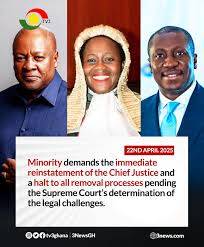
Ghana’s judiciary is at a crossroads, with the suspension of Chief Justice Gertrude Torkornoo sparking a firestorm of controversy. The Minority in Parliament, led by the New Patriotic Party (NPP), has fiercely condemned President John Dramani Mahama’s decision to suspend Torkornoo, calling it a “judicial coup†and demanding her immediate reinstatement. This unprecedented move, the first time a Ghanaian president has suspended a chief justice, has ignited debates about judicial independence and democratic integrity, trending across platforms like X and Google.
The Minority argues that the suspension, based on three petitions alleging misbehavior and incompetence, lacks constitutional grounding. They claim the process violates due process, as Torkornoo was not initially provided with the petitions before her suspension, a legal requirement under Ghana’s 1992 Constitution. Citing historical parallels, such as the 1963 dismissal of Chief Justice Sir Arku Korsah, the NPP warns of a dangerous precedent that could erode public trust in the judiciary. “This is a calculated attempt to pack the courts with NDC-aligned judges,†said MP John Darko, echoing sentiments trending on X, where users debate Ghana’s political landscape.
Public reaction is polarized. Supporters of Mahama, including figures like Dr. Tony Aidoo, argue the suspension is a necessary step to “clean up†the judiciary, accusing Torkornoo of bias toward former President Nana Akufo-Addo’s administration. Critics, however, see it as executive overreach, with hashtags like #ReinstateTorkornoo gaining traction. The Minority has called on traditional and religious leaders to intervene, urging them to counsel Mahama against what they describe as a “blatant usurpation of judicial authority.†This appeal resonates with Google-trending topics like “Ghana democracy†and “judicial independence.â€
Legal challenges are mounting. Two lawsuits, including one by MP Vincent Assafuah, question the constitutionality of the removal process, arguing it undermines the judiciary’s autonomy. The Supreme Court has yet to rule, but the Minority insists that suspending Torkornoo before these cases are resolved is a “reckless abuse of power.†On X, posts reflect growing concern over Ghana’s democratic credentials, with some users comparing the crisis to global trends in executive-judicial tensions.

The stakes are high. Torkornoo, Ghana’s third female chief justice, survived a 2024 removal attempt, but the current petitions have led to a five-member investigative committee. The Minority warns that “loose petitions†could destabilize one of Ghana’s democratic pillars, a sentiment echoed in trending searches for “Ghana judiciary crisis.†They urge Ghanaians to defend judicial independence, framing the issue as a test of the nation’s commitment to the rule of law.
As Ghana navigates this turbulent chapter, the call to reinstate Torkornoo grows louder. Will Mahama heed the Minority’s plea, or will the judiciary face further upheaval? The outcome will shape Ghana’s democratic future, making this a story to watch.