


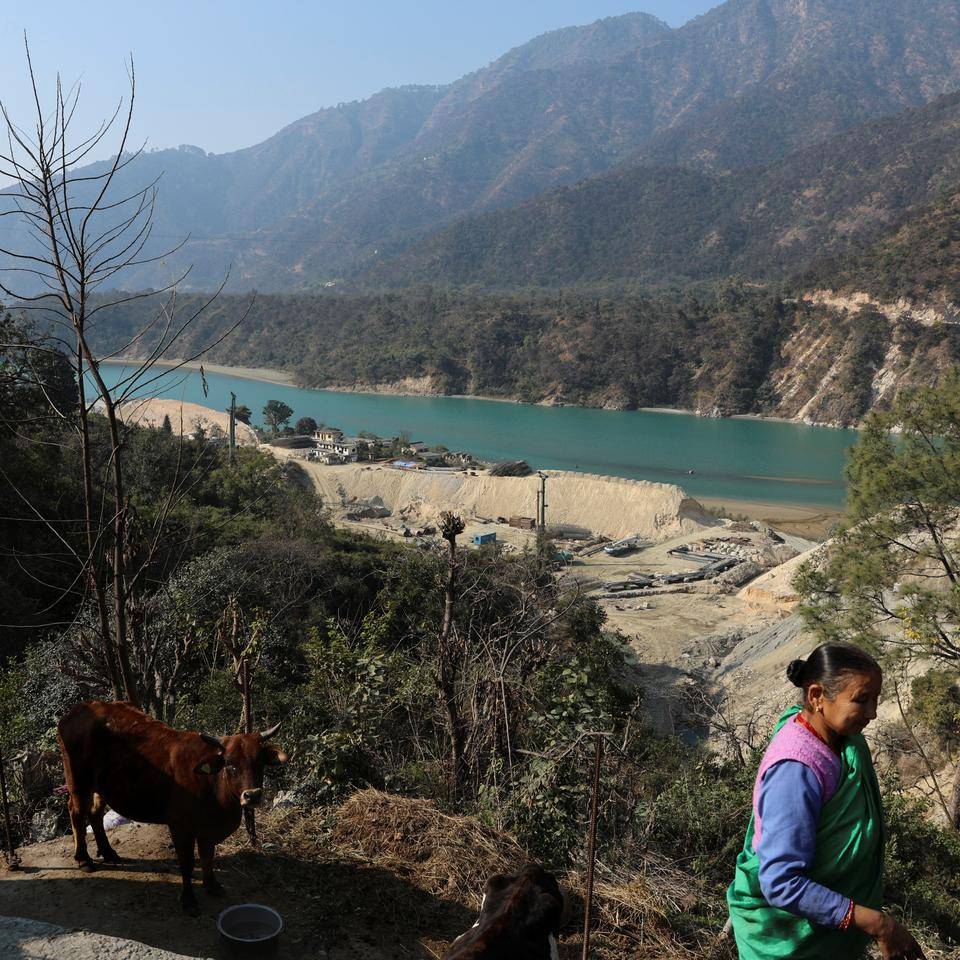
Ecological Crisis in Uttarakhand: A Sacred Land Under Siege

Uttarakhand, often hailed as the “Dev Bhoomi†or “Land of the Gods,†is renowned for its majestic Himalayan ranges, sacred rivers, and spiritually significant shrines. Home to pilgrimage destinations like Kedarnath, Badrinath, Yamunotri, and Gangotri, the state draws millions of visitors every year seeking spiritual solace. However, behind this divine veneer lies an escalating environmental disaster that threatens the very soul of the region.
Rapid development, unregulated tourism, deforestation, hydroelectric projects, and climate change have converged to create a perfect storm of ecological degradation. The consequences are dire: landslides, flash floods, collapsing infrastructure, and a rapidly destabilizing landscape. The sacred land is in peril—and so are the people and wildlife that call it home.
Uttarakhand’s economy heavily relies on religious tourism. Each year, the Char Dham Yatra attracts millions of pilgrims. While this influx boosts local livelihoods, it also puts immense pressure on the fragile Himalayan ecosystem.
High-altitude towns such as Joshimath and Kedarnath, once small, quiet settlements, are now overburdened by infrastructure meant to cater to tourists. Roads are being widened, hotels mushrooming, and forest land cleared—all in a race to accommodate growing numbers. However, little attention is paid to the environmental impact of such expansion.
In early 2023, cracks began appearing in buildings across Joshimath, triggering a large-scale evacuation. Geologists attributed this to unscientific construction, rampant tunneling for hydropower projects, and a lack of environmental planning.
The Himalayan region, with its gushing rivers and steep gradients, is a prime target for hydroelectric power generation. Dozens of dams and tunnels are being constructed across Uttarakhand’s river systems in pursuit of "green energy." But this comes at a steep ecological price.
The construction of tunnels for these projects often destabilizes the earth beneath towns and forests. Blasting, drilling, and excavation disrupt the subterranean water channels and fracture rock layers. This not only makes the ground unstable but also causes springs to dry up and increases the risk of landslides.
In the 2021 Tapovan disaster, a glacier burst triggered a flash flood in the Dhauliganga river, killing over 200 people and destroying a hydropower project. Investigations pointed to climate change and poor planning. But despite this, construction continues largely unabated.
Large tracts of forest are being cleared to make way for roads, resorts, and power plants. Forests, which act as natural barriers to landslides and floods, are rapidly shrinking. The loss of trees weakens mountain slopes and deprives the region of its rich biodiversity.
Uttarakhand’s forests are home to endangered species like the snow leopard, musk deer, and Himalayan monal. As habitats shrink, these species face extinction. Human-wildlife conflicts are also on the rise, with animals straying into human settlements in search of food and shelter.
The Char Dham highway project, aimed at improving road connectivity to pilgrimage sites, involves the felling of over 50,000 trees and carving of mountains. While intended to improve access, it has led to frequent landslides, road collapses, and ecological imbalance.
Uttarakhand sits in one of the world’s most climate-sensitive regions. Glaciers in the Himalayas are retreating at alarming rates. The Intergovernmental Panel on Climate Change (IPCC) warns that the Himalayan glaciers could lose up to two-thirds of their volume by the end of the century if current trends continue.
Melting glaciers feed the state’s rivers and springs. Their depletion disrupts water supplies, increases the frequency of glacial lake outburst floods (GLOFs), and destabilizes mountains. Monsoons are becoming more erratic and intense, leading to more flash floods and cloudbursts.
In 2013, the “Himalayan Tsunami†claimed thousands of lives and caused massive destruction across Kedarnath and surrounding areas. Heavy rainfall and glacial melt overwhelmed the region, and authorities were caught unprepared. This should have been a wake-up call—but little has changed.
As the environment deteriorates, the human toll continues to rise. Thousands have been displaced from landslides and floods. Farmers report declining crop yields as soil fertility drops and water sources vanish. Indigenous communities, who have lived in harmony with nature for generations, are losing their homes, culture, and way of life.
Villages like Raini, famously associated with the Chipko movement, are now under threat due to hydropower projects. Residents of Joshimath live in constant fear of the ground beneath them giving way. Migration from mountain villages to cities is accelerating, turning once-thriving communities into ghost towns.
Despite growing evidence of ecological disaster, government policies often prioritize development over sustainability. Environmental clearances are granted rapidly, and projects are pushed through without comprehensive impact assessments. The role of big contractors, political interests, and profit-driven development overshadows community needs and environmental concerns.
Public protests are mounting. Environmental activists, local residents, and scientists are calling for a moratorium on high-altitude construction, better disaster preparedness, and respect for ecological balance. However, many protesters face arrest, censorship, or are labeled as anti-development.
It is not too late to course-correct, but it requires urgent and coordinated action.
1. Sustainable Tourism: Shift towards eco-tourism that limits the number of visitors, bans plastic, and promotes local culture and biodiversity.
2. Development Limits: Enforce zoning laws that prevent construction in geologically sensitive zones and halt unscientific tunneling and blasting.
3. Community Involvement: Empower local communities, especially indigenous groups, to take part in environmental governance and decision-making.
4. Climate Adaptation: Invest in early warning systems, climate-resilient infrastructure, and glacier monitoring.
5. Reforestation: Launch aggressive afforestation drives with native species and protect remaining forests from encroachment.
6. Independent Oversight: Establish an independent environmental audit body to review and assess all major infrastructure and energy projects
Uttarakhand stands at a crossroads. The same mountains that offer spiritual transcendence are sending dire warnings through crumbling slopes and swollen rivers. The “Land of the Gods†cannot survive on devotion alone it needs action rooted in science, sustainability, and respect for nature.
If development continues to be pursued without ecological wisdom, the cost will be not just environmental, but human and spiritual. Saving Uttarakhand’s fragile landscape is not merely a local issue it is a national imperative, a test of whether India can balance faith, progress, and the earth that nurtures them both.