


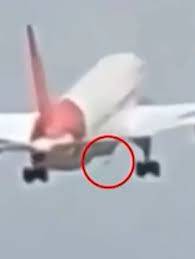
Air India Tragedy Casts Spotlight on Boeing’s 787 Dreamliner

The recent Air India disaster, which claimed at least 270 lives, involved one of Boeing's most advanced and popular aircraft — the 787 Dreamliner. Until now, the 787 was regarded as one of the safest planes in the skies.
Flight 171 crashed just 30 seconds after take-off, and investigators are working to determine the cause. The incident has drawn global attention to the Dreamliner — the first in a generation of fuel-efficient, composite-built aircraft.
For nearly 15 years, the 787 operated without a major accident or fatality, carrying over a billion passengers. More than 1,100 Dreamliners are currently in service worldwide. However, the programme has been plagued by a string of production quality concerns.
Origins of the 787: From Speed to Efficiency
The Dreamliner's journey began after the 9/11 attacks, which reshaped the aviation industry. Boeing had initially been developing the Sonic Cruiser — a near-supersonic jet focused on speed. But after 9/11, airlines prioritised fuel efficiency over speed due to rising fuel costs and shifting passenger demand.
Boeing pivoted, creating the 787 — a long-haul aircraft built to set new standards in efficiency. It was designed to fly smaller, fuel-efficient planes directly between secondary cities, bypassing traditional large hubs. Meanwhile, European rival Airbus pursued the opposite vision with its A380 superjumbo, which ceased production in 2021 due to weak demand.
A Revolutionary Aircraft with Troubled Production
The 787 was groundbreaking. It was the first commercial jet made primarily from carbon composites, reducing weight and improving fuel economy. Advanced aerodynamics, modern engines from General Electric and Rolls Royce, and electrically powered systems further enhanced efficiency. Boeing claimed it was 20% more fuel-efficient than the 767, with significantly reduced noise pollution.

However, the Dreamliner's entry into service wasn’t smooth. In 2013, battery fires led to a global grounding of the fleet for several months. While those technical issues were eventually resolved, production challenges persisted — especially after Boeing opened a new assembly line in South Carolina, far from its traditional Seattle base.
Whistleblower Concerns and Manufacturing Defects
Quality concerns have haunted the 787 programme for years, fuelled by whistleblower allegations from current and former employees.
John Barnett, a former quality manager at Boeing's South Carolina plant, warned in 2019 that rushed production compromised safety. He alleged defective parts were installed from scrap bins and metal shavings accumulated around sensitive wiring. An FAA audit partially upheld his concerns, confirming missing parts and debris beneath aircraft floors. Boeing redesigned components but insisted flight safety was not at risk.
Barnett's fears of a future catastrophe remained until his death by suicide in 2024, while testifying in a whistleblower lawsuit against Boeing.
Other former employees, including Cynthia Kitchens, echoed similar allegations — claiming defective parts were knowingly installed to keep production on schedule. Boeing denies any wrongdoing and states her lawsuit, unrelated to quality issues, was dismissed.
In 2024, another whistleblower, Boeing engineer Sam Salehpour, told a US Senate committee that shortcuts during 787 assembly had introduced potentially dangerous structural flaws, particularly gaps in fuselage joints that could lead to premature fatigue. He suggested over 1,000 aircraft might be affected. Boeing dismissed the claims, citing FAA oversight and independent analysis that found no safety concerns.
A Divided Verdict on Safety
Despite these allegations, the 787 has maintained a strong operational record — over 1,200 jets delivered, more than a billion passengers flown, and no fatal crashes until the recent Air India disaster.
Aviation expert Richard Aboulafia argues that if there were serious, widespread structural issues, they would likely have surfaced long ago. Nonetheless, Boeing faces intense scrutiny following past tragedies involving its 737 Max and ongoing criticism of its production standards.

The Foundation for Aviation Safety, led by former Boeing whistleblower Ed Pierson, has flagged other concerns, including water leaks from washroom taps into electrical bays on some 787 models — an issue now subject to FAA-mandated inspections.
What Lies Ahead
The cause of the Air India crash remains unknown. Investigators are examining all possibilities, from potential aircraft defects to airline maintenance and operational errors.
For now, experts like Scott Hamilton of Leeham Company insist the Dreamliner remains a safe aircraft. "Based on what we know," he says, "I wouldn’t hesitate to fly on a 787."