


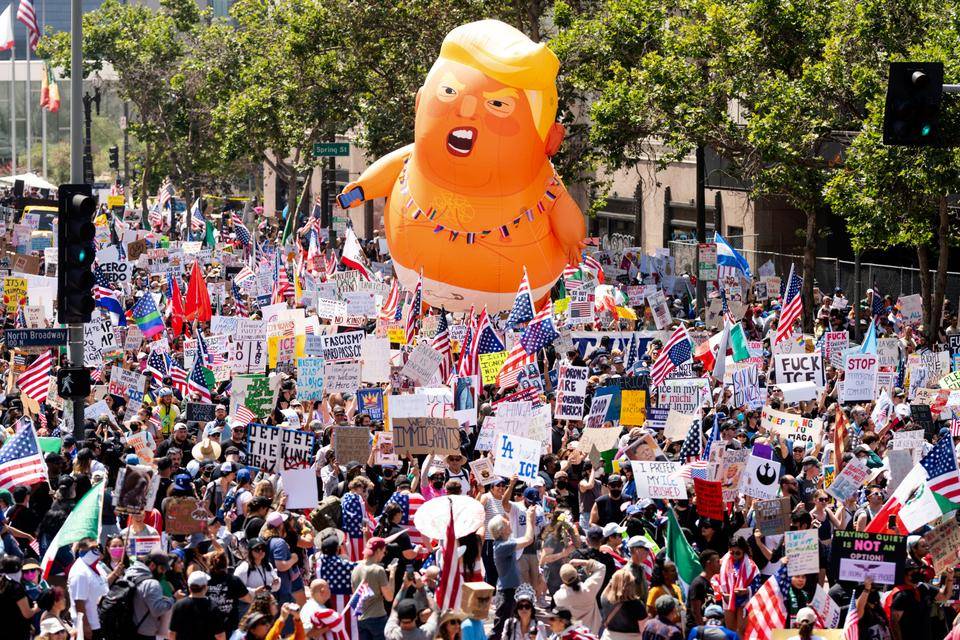
Federal Showdown: Trump’s Justice Department Sues Los Angeles Over Sanctuary Policies

In a dramatic escalation of the immigration enforcement debate, the Trump administration’s Justice Department filed a lawsuit against the City of Los Angeles on June 30, 2025, accusing it of deliberately obstructing federal immigration law. This marks the latest legal offensive in the President’s campaign against sanctuary jurisdictions. The lawsuit criticizes Los Angeles for enacting policies that bar cooperation with Immigration and Customs Enforcement (ICE), use city resources to aid immigration enforcement, or collect information about immigration status—behaviors the federal government contends violate U.S. law.
The complaint, submitted to the U.S. District Court for the Central District of California, contends that L.A.’s sanctuary ordinance is unconstitutional and undermines national supremacy on immigration enforcement. DOJ officials argue that local policies prohibiting cooperation—such as honoring ICE detainer requests lacking judicial warrants—effectively shield undocumented individuals, impede federal agents, and embolden lawlessness. The lawsuit ties Los Angeles’s policies to this month’s protests following federal immigration raids, suggesting the city’s stance contributed to civil unrest that even required intervention by National Guard and Marines.
Justice Department spokesperson Chad Mizelle declared, “We will keep enforcing federal immigration law in Los Angeles, whether or not the city's government or residents agree with it,†emphasizing that federal authority must prevail.
Los Angeles formally declared itself a sanctuary city in November 2024, enacting legislation that prohibits the use of municipal funds or staff for federal immigration enforcement, and restricts sharing “citizenship status†data with ICE—even under federal requests. The policy mirrors those of other major cities like New York, Chicago, and San Francisco.
Proponents of sanctuary policies argue they build trust within immigrant communities, encouraging crime reporting while respecting constitutional limits on federal power. They also cite Supreme Court rulings and Ninth Circuit precedent affirming that local governments cannot be compelled to enforce federal immigration law.
Tensions reached a boiling point in early June when ICE conducted high-profile workplace raids across L.A.—including in the Fashion District—detaining over 100 undocumented individuals. These actions triggered protests in downtown L.A. and surrounding areas, which escalated at times into clashes involving vandalism and attacks on law enforcement.
In response, President Trump deployed California National Guard soldiers and an estimated 700 U.S. Marines to assist with federal enforcement, bypassing state consent and prompting emergency motions by California Governor Gavin Newsom.
Protesters said they were defending immigrant communities; local leaders, including Mayor Karen Bass, decried the law enforcement response as excessive and fear-inducing. Meanwhile, federal officials framed the unrest as evidence that sanctuary policies were endangering public safety.
Los Angeles City Attorney Hydee Feldstein Soto and Councilmember Hugo Soto-MartÃnez responded by reaffirming the sanctuary ordinance’s legality and constitutionality. They argued it aligns with due process, civil rights protections, and local sovereignty, and stressed it was enacted democratically through the City Council.
The city and its advocates plan to defend the ordinance vigorously in court, citing Ninth Circuit precedence that blocks federal coercion of sanctuary jurisdictions—even against efforts to tie federal funding to compliance.
This lawsuit echoes similar legal actions already initiated by the Trump administration against New York, New Jersey, Illinois, and other sanctuary states. Additionally, an executive order issued in April directed federal agencies to identify sanctuary jurisdictions and explore withholding federal grants.
In Los Angeles’s case, the DOJ asserts that withholding federal public-safety funding is justified, though courts have previously blocked such funding restrictions on constitutional grounds.
State Response: Governor Newsom remains engaged in legal resistance, filing injunctions to prevent National Guard usage in enforcement and defending California’s sanctuary stance.
Local Mobilization: City leaders and immigrant advocacy groups have rallied behind the ordinance, warning that DOJ pressure will chill public safety and community trust.
Public Opinion: Surveys show Americans divided—roughly half support the federal deployment, while many oppose military involvement in immigration enforcement. Support falls significantly in California.
1. Federalism vs. federal supremacy: The case tests the legal limits of local autonomy in immigration—a constitutionally charged conflict between city rights and national enforcement.
2. Precedent-setting: A ruling in favor of the DOJ could empower federal leverage over hundreds of sanctuary jurisdictions, reshaping U.S. intergovernmental relations.
3. Community trust: Sanctuary policies were designed to foster trust between municipal police and immigrant residents; slicing into that could undermine public safety.
4. Immigration enforcement norms: The lawsuit signals the Trump administration’s uncompromising stance, with federal agents—bolstered by troops—expected to continue enforcement regardless of local policies.
Legal proceedings have just begun. If the court accepts the DOJ’s challenge, it must determine whether Los Angeles’s sanctuary ordinances are preempted by federal law—and whether withholding public safety funds or prosecuting local officials is constitutional.
Los Angeles is anticipated to file counterclaims and seek injunctions. Concurrent litigation from other sanctuary jurisdictions provides a potential blueprint—and may influence nationwide policy outcomes.