


Luka Modrić: The Maestro of Modern Football
Luka Modrić, born on September 9, 1985, in Zadar, Croatia, is widely regarded as one of the most accomplished and influential midfielders of his generation. His journey from a childhood marked by the turmoil of the Croatian War of Independence to the pinnacle of global football is a narrative of extraordinary resilience, technical brilliance, and unwavering determination. Modrić's career serves as a testament to how talent, when combined with an indomitable spirit, can overcome the most daunting of circumstances.
Modrić's early years were spent in the modest village of Modrići, part of the Obrovac municipality. His family lived in a rented house, and his grandfather was tragically killed during the conflict in the early 1990s, forcing the family to become refugees. It was during these challenging times that football became his sanctuary. His first steps in the sport were taken with the local club, NK Zadar. His small stature initially led to skepticism from some observers, but his exceptional technical ability, vision, and footballing intelligence were undeniable even at a young age. Recognizing his prodigious talent, he was signed by Dinamo Zagreb, one of Croatia's most prestigious clubs, at the age of 16.
His development at Dinamo Zagreb involved strategic loan spells to gain first-team experience. He spent time with Zrinjski Mostar in the Bosnian Premier League and later with Inter Zaprešić in the Croatian First League. These periods were crucial for his physical and tactical maturation, exposing him to the rigors of senior football. Upon his return to Dinamo, he quickly established himself as a key player, leading the team to three consecutive league titles from 2006 to 2008 and earning the coveted title of Croatian Footballer of the Year in 2007. His performances in the UEFA Cup attracted the attention of scouts from Europe's top leagues.
In 2008, Modrić made a significant move to the English Premier League, joining Tottenham Hotspur for a fee reported to be around £16.5 million. His transition to the physical and fast-paced English game was not instantaneous. Initially deployed in an advanced attacking role, he struggled to impose himself. However, under manager Harry Redknapp, he was repositioned as a deep-lying playmaker, a move that unlocked his full potential. From this central role, Modrić began to dictate the tempo of matches with his impeccable passing range, close control, and tactical awareness, becoming the creative heartbeat of the Tottenham team. His four seasons in London solidified his reputation as a world-class midfielder.
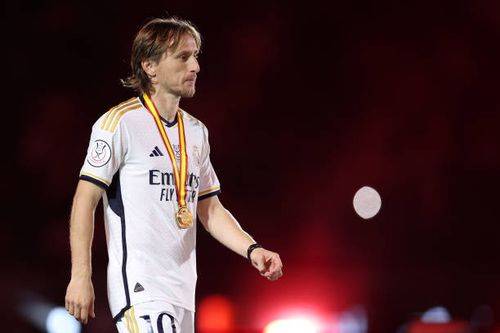
The defining chapter of Modrić's club career began in 2012 with his transfer to Real Madrid for a fee of approximately €30 million. Joining the Spanish giants was a monumental step, and the pressure to succeed at the Santiago Bernabéu was immense. His first season was challenging, with some sections of the media questioning his adaptability. Yet, with characteristic perseverance, he overcame this difficult period. Under the management of Carlo Ancelotti, Modrić became an indispensable component of the Real Madrid midfield, forming a legendary partnership with Toni Kroos and Casemiro. His role was that of the metronome—controlling the rhythm of the game, breaking opposition lines with incisive passes, and contributing defensively with his tenacious pressing.
With Real Madrid, Modrić has achieved unprecedented success. He has been instrumental in winning multiple UEFA Champions League titles, including an historic three-peat from 2016 to 2018. He has also secured numerous La Liga titles, FIFA Club World Cups, and UEFA Super Cups. His individual accolades at the club level are a reflection of his consistent excellence, cementing his status as a modern-day legend for the Merengues.
On the international stage, Modrić's achievements are equally profound. As the captain and spiritual leader of the Croatian national team, he has been the driving force behind their greatest successes. His performances at the 2018 FIFA World Cup in Russia were nothing short of heroic. He led a determined Croatian squad, against all odds, to the final, earning the Golden Ball as the tournament's best player. Although Croatia finished as runners-up, their campaign captured the imagination of the football world and brought immense pride to their nation. This monumental achievement was a crowning moment in his career, leading to his receipt of the 2018 Ballon d'Or, where he broke the decade-long duopoly of Lionel Messi and Cristiano Ronaldo. He further cemented his legacy by captaining Croatia to a third-place finish in the 2022 World Cup, demonstrating his enduring class and leadership.
Beyond his technical attributes, Modrić is celebrated for his professionalism, humility, and leadership. He is not a player who seeks the limelight, but rather one who commands respect through his actions on the pitch. His playing style is a masterclass in midfield artistry—effortless dribbling in tight spaces, visionary passing, and an unparalleled ability to read the game. Luka Modrić's story is more than just a footballing biography; it is an inspiring saga of a boy who, through sheer talent and an unbreakable will, rose from war-torn adversity to become the maestro of the modern game and a national icon for Croatia.

No comments yet
Be the first to share your thoughts!