


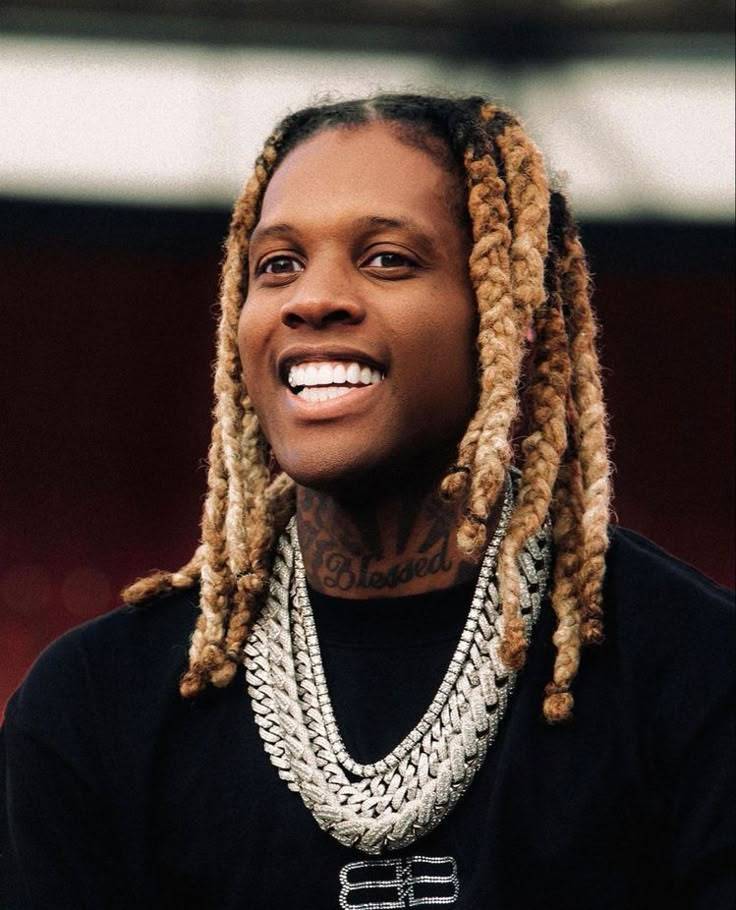

Lil Durk, born **Durk Devontay Banks** on October 19, 1992, in the Englewood area on Chicago’s South Side, is an American rapper whose life story embodies struggle, resilience, and transformation. Growing up in one of Chicago’s most violent neighborhoods, Durk faced hardship from a young age. His father was imprisoned when he was still a baby, leaving his mother to raise him and his siblings alone. The absence of a stable family structure, combined with economic difficulty, meant Durk had to grow up quickly. He has often spoken about the times when there was not enough food in the house and how these challenges shaped his outlook on life. These early experiences later became the foundation of the raw emotion and realism in his music.
During his teenage years, Durk found himself surrounded by the harsh realities of street life, but he also discovered a passion for music. He dropped out of high school before graduating, and at just seventeen, he became a father. This new responsibility pushed him to take music more seriously, seeing it as a path toward financial stability and a better future. He began releasing music independently online, gaining attention through early tracks like “I’m a Hitta” and “Sneak Dissin’.” His unique blend of gritty street storytelling and melodic delivery helped him stand out within Chicago’s drill scene, which was exploding in popularity during the early 2010s.
Durk’s breakthrough came with his mixtape series **“Signed to the Streets,”** released in 2013 and 2014. The tapes generated significant buzz and caught the attention of major industry figures, eventually leading to a record deal with **Def Jam Recordings**. In 2015, he released his debut studio album, *Remember My Name*, which introduced him to a wider audience. Although the album did not immediately propel him to superstardom, it marked the beginning of his journey as a national artist. The following year, he released *Lil Durk 2X*, which further established his presence in mainstream hip-hop.
Even with a growing reputation, Durk continued to face personal challenges. He lost close friends and family members to gun violence, including his cousin Nuski and later his brother D Thang. These losses deeply affected him but also fueled the emotional vulnerability in his music. His songs often explore themes of pain, loyalty, grief, and survival — reflections of the harsh environments he grew up in and the pressures that come with fame.
After parting ways with Def Jam in 2018, Durk returned to independent releases, which sparked a major turning point in his career. His projects *Just Cause Y’all Waited* and *Love Songs 4 the Streets 2* helped re-establish him as a powerful, authentic voice in hip-hop. In 2020, he gained even more mainstream attention through collaborations with major artists and the release of his album *The Voice*, which became one of the most successful works of his career. His joint album with Lil Baby, *The Voice of the Heroes* (2021), debuted at number one on the Billboard 200, solidifying his status as a top-tier rapper.
In the years that followed, Durk continued to grow musically and personally. His albums *7220* (2022) and *Almost Healed* (2023) showcased a more reflective, mature artist capable of blending melodic rap with emotional storytelling. Today, Lil Durk is widely recognized not only as a pioneer within the drill genre but also as an influential figure who has shaped the sound of modern hip-hop. Through his label **Only the Family (OTF)**, he has helped elevate new talent from his community, offering opportunities to young artists facing the same struggles he once endured.
Lil Durk’s life is a testament to perseverance. From the challenges of Chicago’s South Side to the heights of mainstream success, he has built a career rooted in authenticity, vulnerability, and determination. His music continues to resonate with millions around the world, making him one of the most important and influential rappers of his generation.
No comments yet
Be the first to share your thoughts!