



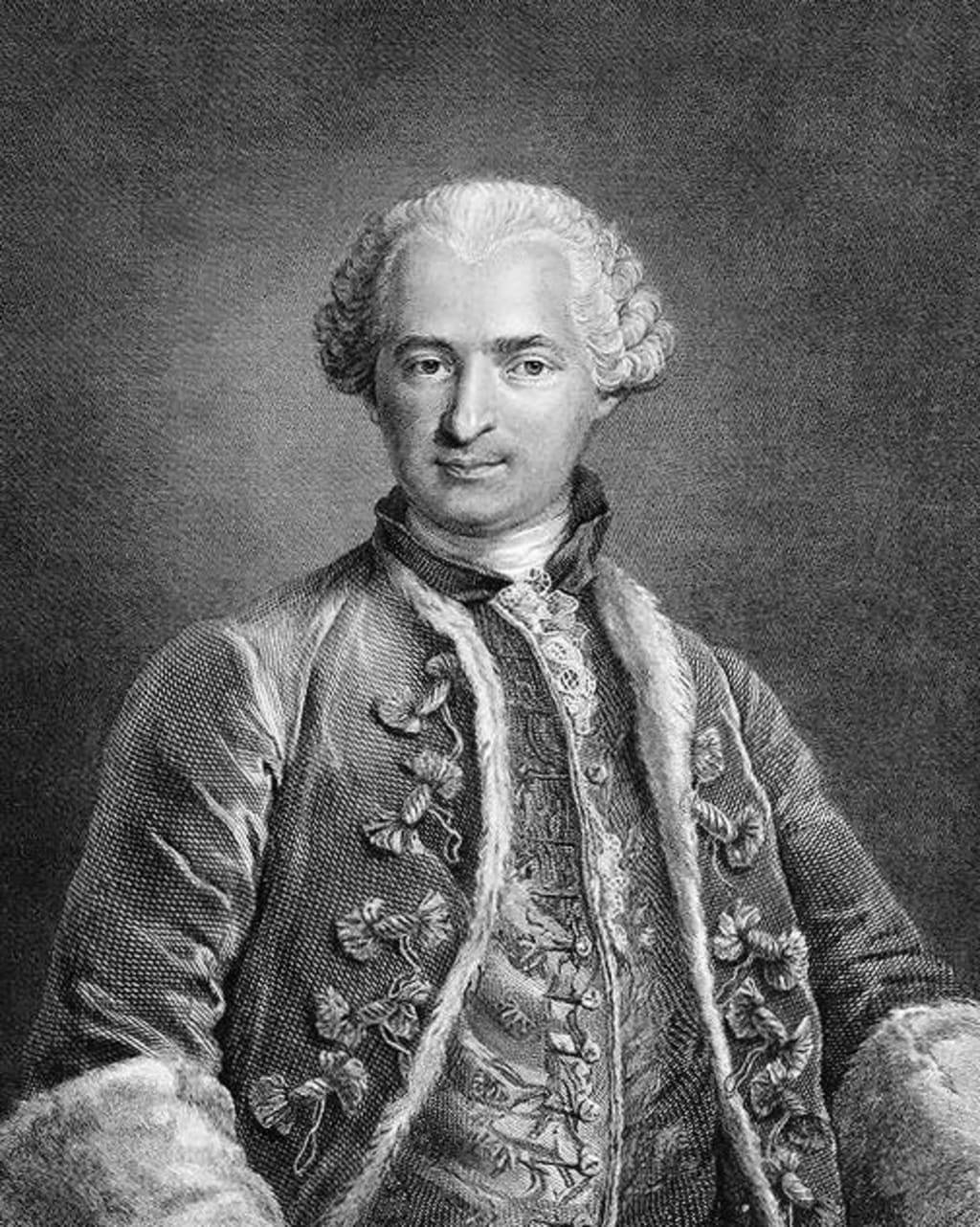
Imagine this: It's a chilly evening in 1745, and you're sipping coffee in a dimly lit London tavern, the kind where whispers of revolution mix with the clink of coins. Suddenly, the door bursts open, and authorities drag in a mysterious stranger-pockets bulging with diamonds, violin in hand, refusing to utter his name. Who was this guy? And why, centuries later, do people swear he's still out there, unchanged, meddling in the world's biggest moments? That's the hook that pulled me into the wild tale of the Count of Saint Germain, and honestly, it left me scratching my head in wonder.
You know, I've always been a sucker for those stories that blur the line between history and myth-the ones that make you pause and think, "What if?" The Count pops up like a recurring dream in Europe's turbulent past. Picture him at Versailles, decked out in velvet and jewels, charming the pants off King Louis XV with tales of ancient Rome as if he'd strolled its streets himself. He didn't just talk the talk; he walked it. Casanova, that infamous lover, watched him turn a silver coin into gold with some mysterious black powder and a flick of flame. Excitement bubbles up just thinking about it-could alchemy really be real, or was it all smoke and mirrors? But then, he fixes the king's cracked diamond, making it shine brighter than before, and suddenly he's got his own lab in the palace. Who wouldn't feel a twinge of envy there?

And here's where it gets really intriguing. This man claimed he'd seen it all-Nero fiddling while Rome burned, the hanging gardens of Babylon in full bloom, even Christ's crucifixion up close. Slight hesitation here: Was he delusional, or something more? People like Voltaire called him a marvel, though maybe with a sarcastic edge. Then there's the Countess von Konnigsmark, who spots him in 1760 and swears he's the same guy she met fifty years earlier in Venice-no wrinkles, no gray hairs. "You're over a hundred!" she gasps. He just smiles: "Not impossible." It's these little authentic touches, like a faded photograph from your grandma's attic, that make the legend stick. I've had moments like that-running into an old friend who hasn't aged a day, and you wonder if time plays favorites.
But life wasn't all glamour for the Count. He dipped into politics too, brokering peace deals in The Hague, whispering secrets to Catherine the Great in Russia, even showing up uninvited at the signing of the American Declaration of Independence. Legend has it he gave this fiery speech: "Hang together, or hang separately," urging those nervous delegates to grab their quills despite the noose waiting if they failed. Poof-he vanishes from a locked room. Excitement aside, it's reflective stuff. How many times have we all faced a crossroads, heart pounding, knowing one choice could rewrite everything?
Fast forward, and death couldn't keep him down. Officially, he kicks the bucket in 1784 from pneumonia, buried with fanfare in Germany. Grave's empty later, though-classic twist. Sightings keep coming: Warning a friend of Marie Antoinette about the French Revolution's bloody wave, right down to the guillotine's shadow. She ignores him, of course, and pays the price. Then he's in New Orleans around 1902, throwing lavish parties as Jacques St. Germain, sipping from a goblet that turns out to be laced with blood. A woman accuses him of biting her neck-vampire vibes, anyone? Flees, leaving bottles of the red stuff behind. Creepy, right? And don't get me started on the 20th century: Predicting world wars to prisoners, chatting with a hiker on Mount Shasta in 1930, inspiring a whole spiritual movement. Even a French TV appearance in 1972, where a guy claiming to be him turns lead to gold on air-turns out it was a trick with hidden charcoal, but still, the audacity!
Now, reflecting on the debunking side-because every good story needs a reality check-it seems the Count might've been a clever con artist. Broken English in his early days, a possible illegitimate royal birth, sleight-of-hand tricks with coins and gems. Voltaire's praise? Probably tongue-in-cheek. The countess? Maybe her memory was fuzzy with age. Post-death tales often come from shady sources, like folklore or fraudsters chasing fame. You know, it's like those urban legends about Elvis sightings-thrilling, but grounded in wishful thinking.
All said, pondering the Count leaves me with a light curiosity: What if immortality isn't a curse or a gift, but just a really long adventure? Or perhaps he's a reminder that history's full of enigmas we chase for the thrill. Ever wondered if someone's watching over us, pulling strings from the shadows? Makes you think, doesn't it?
No comments yet
Be the first to share your thoughts!