



LABOUR & GOVERNANCE | MARCH 12, 2026

Despite mediation attempts, Ghana's civil servants are standing
firm — and their frustration goes far deeper than a pay dispute.
When
government workers walk off the job, the effects ripple far beyond office
corridors. Files go unprocessed, services stall, and the ordinary Ghanaian is
left waiting. That is precisely the situation unfolding across the country
right now — and if you were hoping it would be resolved quickly, think again.
The Civil
and Local Government Staff Association of Ghana (CLOGSAG) launched a nationwide
strike on March 9, 2026, and on Thursday, March 12, the association made one
thing crystal clear: they are not backing down.
So, What Is This Strike Really About?
At the heart
of the dispute is a demand that sounds straightforward: honour an existing
agreement. CLOGSAG has long been pushing for a separate, distinct salary
structure for its members civil and local government employees. This isn't a
new ask; it is rooted in a memorandum of understanding that the association
says was negotiated and agreed upon during Ghana's political transition period.
What makes
the matter even more frustrating for union members is that the salary structure
has reportedly already been applied in select institutions — including the
Ministry of Finance where certain staff are already benefiting from the
arrangement. For those still left out, the message from leadership is simple:
if we are all civil servants, why are some eating while others go hungry?
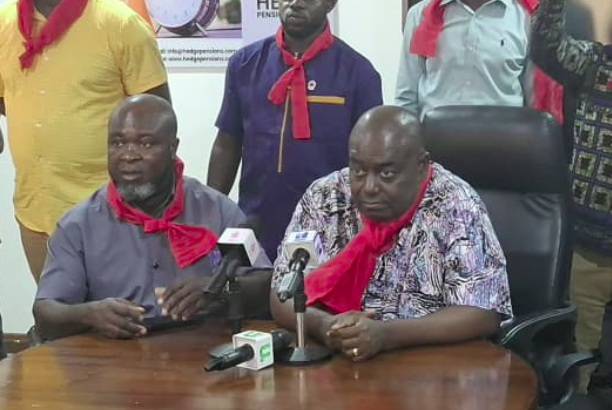
CLOGSAG's
Executive Secretary, Isaac Bampoe Addo, framed it in even more personal terms,
noting that this is not merely about monthly take-home pay. Salary structures,
he explained, have a direct bearing on retirement benefits and pension
entitlements. In other words, what workers earn today shapes what they will
live on in old age. That is not a small thing.
The Mediation Mess
On March 11,
the National Labour Commission (NLC) convened a meeting to address the standoff
between CLOGSAG and the government. There was just one problem — CLOGSAG was
not there.
The
association says it received no formal communication about the meeting, and
proceeded to make its absence known loudly. Bampoe Addo did not mince words:
hosting a meeting where one party is absent and then proceeding to make
decisions is a violation of natural justice. It is hard to argue with that
logic.
The NLC has
since rescheduled the engagement to March 18. But CLOGSAG says it is not
holding its breath. The association has asked that all discussions held with
government this week be documented and submitted in writing — and as of
Thursday, that written commitment has not arrived.
A Crisis of Trust, Not Just Pay
Reading
between the lines of CLOGSAG's statements, it becomes apparent that this strike
is about more than money — it is about trust. When an agreement made during a
political transition is left to gather dust under a new administration, workers
have reason to wonder whether promises made to them will ever be kept.
The union's
insistence on written documentation before any return to work is telling. Words
spoken in a meeting room can be forgotten, reinterpreted, or denied. A signed,
written commitment is a different matter entirely. CLOGSAG has clearly been
burned before and is not willing to walk back to their desks on the strength of
verbal assurances alone.
What Happens Next?
With the
NLC's rescheduled meeting set for March 18, there is a narrow window for
dialogue. But for that window to matter, the government will need to show up —
literally and figuratively. CLOGSAG has already signalled that it wants
concrete action, not just conversation.
Until then,
civil and local government offices across Ghana remain effectively shut, and
the workers inside them remain firmly on the other side of those locked doors.
The National Executive Council of CLOGSAG voted unanimously to keep the strike
going — a show of solidarity that the government would do well not to
underestimate.
For now,
Ghana waits.
Originally reported by GraphicOnline. This blog post is an
independent commentary and analysis of the CLOGSAG industrial action.
No comments yet
Be the first to share your thoughts!