



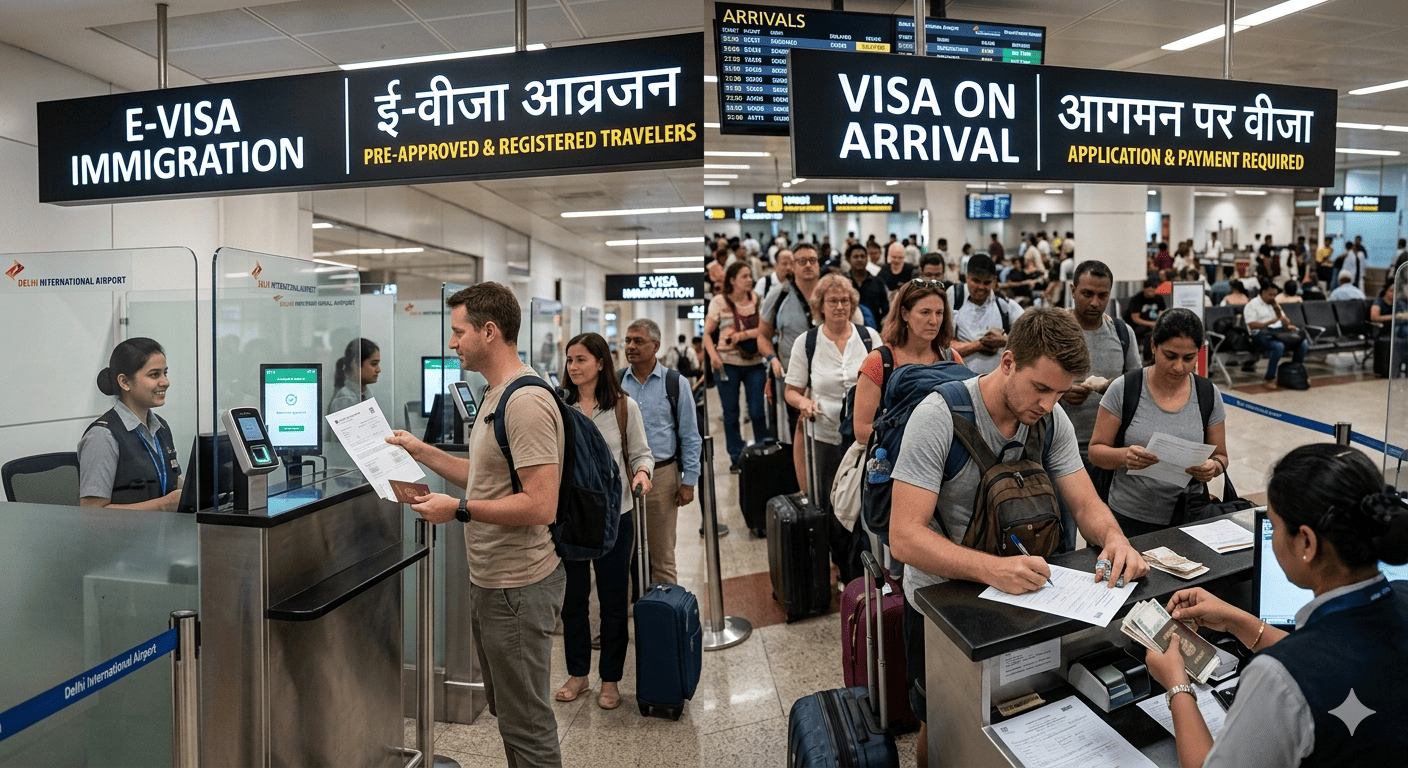
Planning a journey to the Democratic Republic of the Congo (DRC) can feel like prepping for an adventure of a lifetime — from the lush rainforests and gorilla trekking in Virunga National Park to the bustling streets of Kinshasa and the scenic beauty of the Congo River. But before you pack your bags, one of the first questions on every traveler’s mind is: Democratic Republic of the Congo Visa On Arrival or eVisa : What’s the Better Option for Travelers? In this guide, I’m going to walk you through everything you need to know — from what each option entails, how they differ, which one might save you time or stress, and how to make the best choice for your travel style.
Whether you’re a first-time visitor, part of a family group, on a business journey, or an experienced explorer, this article will break down the entire process in a friendly, conversational way. Think of me as your travel buddy guiding you step-by-step so you walk into Congo informed and confident.
What are the main differences between a Congo eVisa and Visa on Arrival?
Let’s break down the main points where these two options differ:
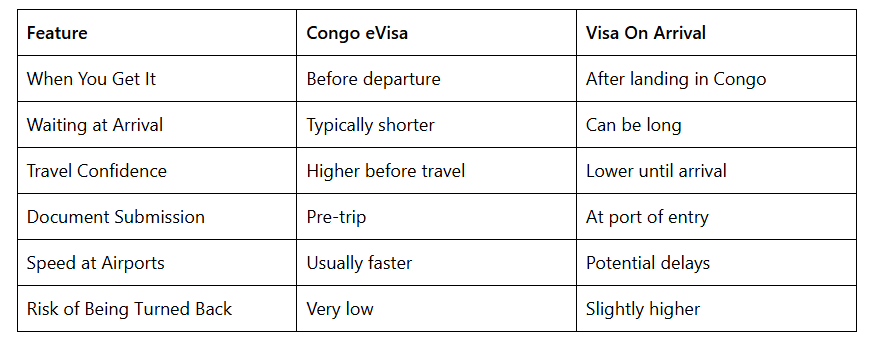
In short, an eVisa gives you certainty before travel, while Visa On Arrival leaves more to chance at the airport.
Which Option Is Faster for Getting Into Congo: eVisa or Visa On Arrival?
If speed is your priority, eVisa tends to be the winner. With your eVisa ready before you fly, you generally go straight through the gates with minimal hold-ups.
On the flip side, getting a Visa On Arrival sometimes means waiting in long queues at immigration desks while staff process applications one traveler at a time — especially on busy days. That’s not exactly how most people want to start an overseas trip.
Winner for speed: Congo eVisa
Which Is More Convenient for Travelers: eVisa or Visa On Arrival?
Convenience doesn’t just mean a quick process — it also means predictability. Knowing you won’t be held up upon arrival makes everything smoother — from catching your pre-booked ride to starting your itinerary on time.
An eVisa means you have fewer surprises, while a Visa On Arrival means you need to be mentally prepared for potential delays.
Winner for convenience: Congo eVisa
Which Is Easier to Apply For: eVisa or Visa On Arrival?
Many folks assume showing up and handling things in person is easier — but that’s not always true.
With an eVisa, you fill out your details online, upload documents, and receive confirmation before travel. For a Visa On Arrival, you must gather all your documents, face potential queues, and work with officials directly at the airport — all without the comfort of preparing it from home.
Winner for ease: Congo eVisa
Which One Requires Fewer Documents: eVisa or Visa On Arrival?
The content required for both options tends to be similar — things like your passport, a photo, and supporting documents. But with a Visa On Arrival, you must have everything ready right when you land, and missing a single document can delay your entry.
With an eVisa, you have time to double-check, resubmit, or correct before traveling.
Winner for simplicity: Congo eVisa
Which Is Better for Business Trips: eVisa or Visa On Arrival?
Business trips usually come with tight schedules and packed days. Waiting at arrival counters isn’t ideal when you have meetings lined up.
Having an eVisa — which is confirmed ahead of time — lets you step off the plane and go straight to your next appointment.
Winner for business travelers: Congo eVisa
Which Is Better for Families: eVisa or Visa On Arrival?
Traveling with family can already be a handful — add long queues and document checks upon arrival, and even short waits become stressful.
An eVisa keeps things smooth for parents and kids alike, helping you bypass confusion or delays at the airport.
Winner for families: Congo eVisa
Which one is less stressful: eVisa or Visa on Arrival?
Here’s the honest truth: anything you can handle before your trip usually feels less stressful than dealing with it on the actual travel day.
The unpredictability of a Visa On Arrival — varying wait times, paperwork at the terminal, language or communication hurdles — can make some travelers uneasy.
Winner for stress-free experience: Congo eVisa
Group eVisa Applications: Agent Benefits
Applying for entry permissions for a group can sometimes be more complex than doing it solo — multiple travelers, different documents, and ensuring all details match perfectly. That’s where an agent can be helpful.
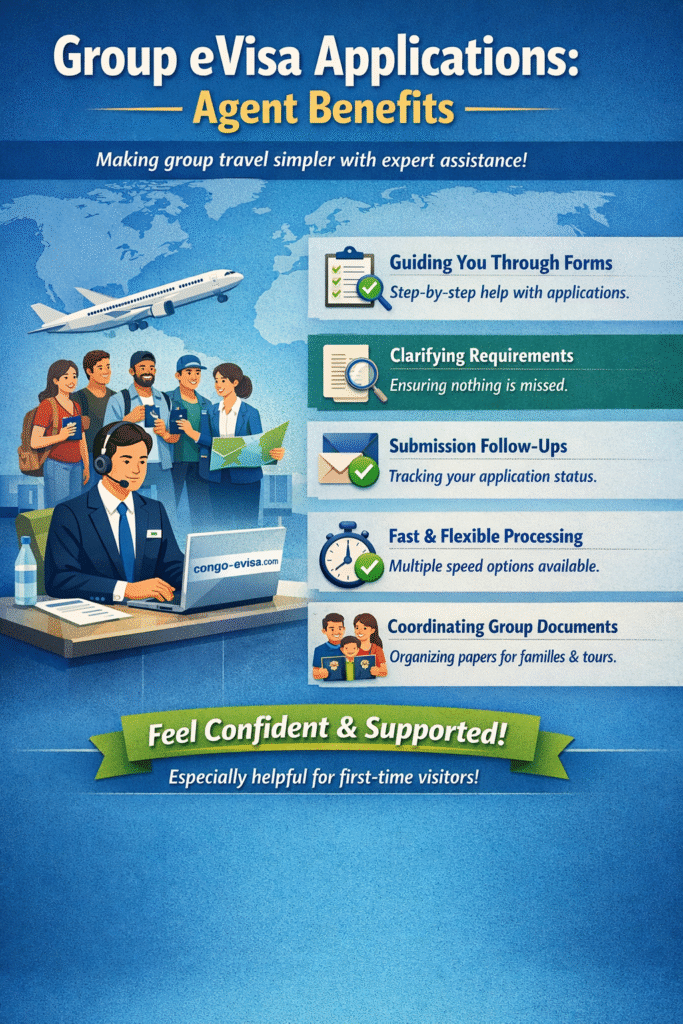
Agents — including those at congo-evisa.com — help by:
- Guiding you step-by-step through application forms
- Clarifying requirements so nothing is missed
- Supporting submission follow-ups
- Offering multiple processing speed options
- Helping coordinate documents for families or tour groups
If you ever feel unsure about any part of the process, agents make it feel more manageable — especially for first-time visitors.
Which Is More Secure for International Payments: eVisa or Visa On Arrival?
While preparing an eVisa, you typically complete all transactions from home in a secure digital process. That gives travelers peace of mind compared to handling transactions at an arrival desk where lines are long and distractions are many.
Winner for secure processing: Congo eVisa
Which Is Better for Group Travel: eVisa or Visa On Arrival?
Group trips are amazing — but only when everyone gets through entry smoothly. Handling group applications before travel ensures everyone is ready to go together upon arrival. With Visa On Arrival, variations in processing times between individuals can cause frustration and splits in the group.
Winner for group travel: Congo eVisa
Which Is Less Risky for Missing Flights: eVisa or Visa On Arrival?
If you’re connecting through another country or have onward flights soon after landing, waiting in a long immigration queue can make you nervous.
Since an eVisa speeds your processing, you’re less likely to feel rushed or miss flights due to initial entry hold-ups.
Winner for keeping travel smooth: Congo eVisa
Which is better for travelers who want to avoid queues: eVisa or Visa on Arrival?
There’s no contest here. Long lines are part of major airport routines — but an eVisa minimizes your wait time at the first checkpoint. That means you breeze through faster and start your adventure sooner.
Winner for avoiding queues: Congo eVisa
Who Is Eligible to Apply for a DRC Visa?
If you're traveling to the Democratic Republic of the Congo (DRC), you can apply for a visa if:
- You have a valid passport.
- Your passport is valid for 6 months after your arrival.
- You have basic documents like a photo and your travel details.
- You want to travel for tourism, business, or to visit family.
The easiest way to get your visa is by applying for an eVisa online before your trip. This way, you’re all set before you even leave!
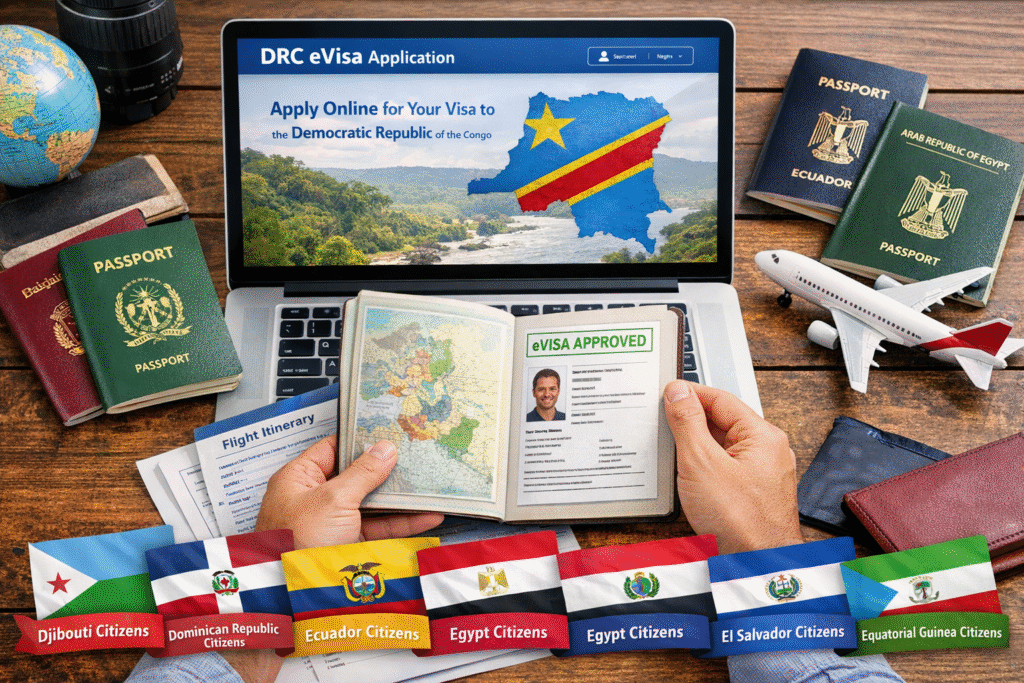
Here’s how citizens from different countries can apply:
- DRC eVisa for Djibouti Citizens – Fast and Easy Online Visa Application Guide: Djibouti citizens can enjoy a simple application flow to secure entry ahead of travel.
- DRC eVisa for Dominican Republic Citizens – Simple Online Visa Application Guide: Dominican passport holders can apply electronically without waiting until arrival.
- DRC eVisa for Ecuador Citizens – Easy and Quick Online Visa Guide: Ecuador nationals will find an uncomplicated form that leads to confirmation before you depart.
- DRC eVisa for Egypt Citizens – Fast and Easy Online Visa Application Guide: Travelers from Egypt can complete their entry approval in advance, right from home.
- DRC eVisa for El Salvador Citizens – Simple Online Visa Application Guide: Salvador citizens can fill in requirements online and get ready to travel with peace of mind.
- DRC eVisa for Equatorial Guinea Citizens – Easy and Quick Online Visa Guide: Passport holders from Equatorial Guinea have a streamlined option to arrange entry ahead of time.
Conclusion
So, after all that — Congo eVisa or Visa On Arrival— the clear answer for most people is the eVisa. It offers greater convenience, faster processing, fewer surprises, and a more relaxed travel experience.
While Visa On Arrival might still suit adventurous souls who prefer handling everything on ground, the advantages of preparing before departure — especially for families, business trips, and group travel — make eVisa the smarter choice for most travelers.
And if the process feels intimidating or you simply want expert help, services like those offered by congo-evisa.com can make your application journey much smoother.
Frequently Asked Questions (FAQs)
Q: Can I still get a visa at the airport without prior approval?
Yes, Visa On Arrival is possible for many nationalities — but it often involves long waits and more documents at the terminal.
Q: Is an eVisa valid for multiple trips?
Most eVisas for Congo are single entry, so if you leave and plan to return, you may need to apply again.
Q: How soon should I apply before my departure?
It’s best to apply at least a few weeks before travel, especially if you opt for standard processing.
Q: Will my eVisa be emailed to me?
Yes — once approved, you receive it electronically, so keep it accessible on your phone or printed.
Q: Can I travel if my entry approval isn’t ready before departure?
It’s risky. If your document isn’t confirmed before boarding, you may be denied boarding or entry — so plan ahead.
No comments yet
Be the first to share your thoughts!