



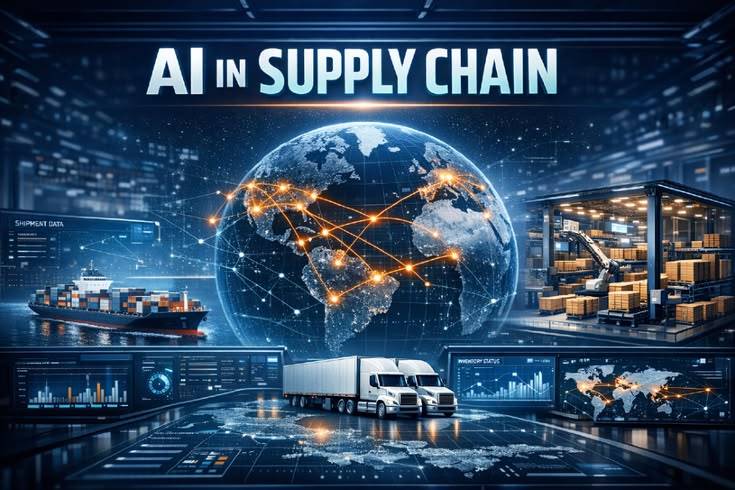

*The disruption is real. But so is the opportunity — if you know where to position yourself before everyone else figures it out.*
---
Let's skip the motivational speech. You've already heard "AI will change everything." What you haven't been told — clearly, practically — is **what to do about it right now.** This article gives you a concrete, step-by-step playbook for not just surviving the automation wave, but riding it.
Warehouse automation. AI-powered demand forecasting. Route optimization algorithms replacing junior planners. The signs are everywhere. According to the World Economic Forum, over 85 million jobs globally could be displaced by automation by 2030 — and logistics is squarely in the crosshairs.
But here's what the headlines miss: **supply chains don't run on software alone.** They run on judgment, relationships, local knowledge, and the ability to make fast decisions when things go wrong. Those things are not going away. The question is whether you're building them — or just waiting.
> *"The professionals who thrive won't be the ones who compete with AI. They'll be the ones who direct it."*
---
## Step 1 — Understand What AI Actually Automates (and What It Can't)

AI is exceptionally good at pattern recognition on structured data — inventory forecasting, shipment tracking, route planning, invoice matching. If your current role is 90% repetitive data entry or report-pulling, that work is genuinely at risk.
What AI cannot do well: navigate a customs dispute at a border crossing, manage a supplier relationship during a crisis, adapt when a flood wipes out a distribution corridor, or make a judgment call that involves ethics and accountability. **Your goal is to make yourself the person who handles what the algorithm escalates to.**
---
## Step 2 — Learn to Read Data (Even If You're Not a Data Scientist)
You do not need to become a programmer. You need to be able to look at a dashboard, understand what it's telling you, spot what's wrong, and make a decision. That's it. Companies are drowning in logistics data and desperately short on people who can interpret it.
Start with Excel beyond basic formulas: pivot tables, VLOOKUP, basic data cleaning. Then pick up Power BI or Tableau — both have free versions and hours of free tutorials on YouTube. One weekend a month for six months and you'll be ahead of 80% of logistics graduates entering the market.
---
## Step 3 — Specialize in a High-Complexity Sector
Generic logistics roles are the most vulnerable to automation. Specialized ones — oil and gas logistics, pharmaceutical cold chain, project cargo, humanitarian and NGO supply chains — are far more defensible. These sectors deal with irregular shipments, strict compliance requirements, and high stakes. They need human experts, not just software operators.
Pick one sector and go deep. Read its journals, follow its professionals on LinkedIn, understand its unique pain points. When you enter the job market, you want hiring managers to think: **"This person knows our world."**
---
## Step 4 — Get Certified Before You Graduate
Degrees tell employers you can learn. Certifications tell employers you already know. The CILT (Chartered Institute of Logistics and Transport) foundation certificate is globally recognized and achievable while studying. APICS CSCP (Certified Supply Chain Professional) carries massive weight internationally.
These credentials do two things: they signal commitment to the profession, and they force you to study frameworks — like SCOR, lean logistics, and demand planning — that give you the vocabulary to manage AI tools rather than just use them.
---
## Step 5 — Build a Public Track Record Now
Most logistics professionals have zero online presence. That is your advantage. Start writing: about supply chain news, local trade corridors, disruptions you've studied, lessons from your internship. One thoughtful LinkedIn article per month, consistently for a year, positions you as a voice in the field before most of your peers have even updated their profiles.
By the time AI finishes reshaping the industry — and it will take longer than the headlines suggest — you want to be the professional with 200+ engaged followers, a reputation for insight, and a network built on real credibility. **That is not automatable.**
---
## ⚡ Quick Action Checklist
- [ ] Identify the 3 most repetitive tasks in your current or target role
- [ ] Find one free Power BI or Tableau tutorial and complete it this week
- [ ] Pick one sector to specialize in and follow 10 professionals in it on LinkedIn
- [ ] Look up CILT student membership — it's often cheaper than you think
- [ ] Draft your first LinkedIn article this weekend. Keep it under 400 words
---
The supply chain professionals who will struggle in the next decade are not the ones with "wrong" skills. They're the ones who keep doing the same thing, hoping the disruption skips them. It won't.
But the ones who treat this moment as a signal — to specialize, upskill, and build visibility — will find that AI doesn't shrink their career. It amplifies it.
**The window to position yourself is open right now. The question is whether you'll use it.**
---
*Share thiss article if it helped you. Follow for more supply chain career insights.*
No comments yet
Be the first to share your thoughts!