



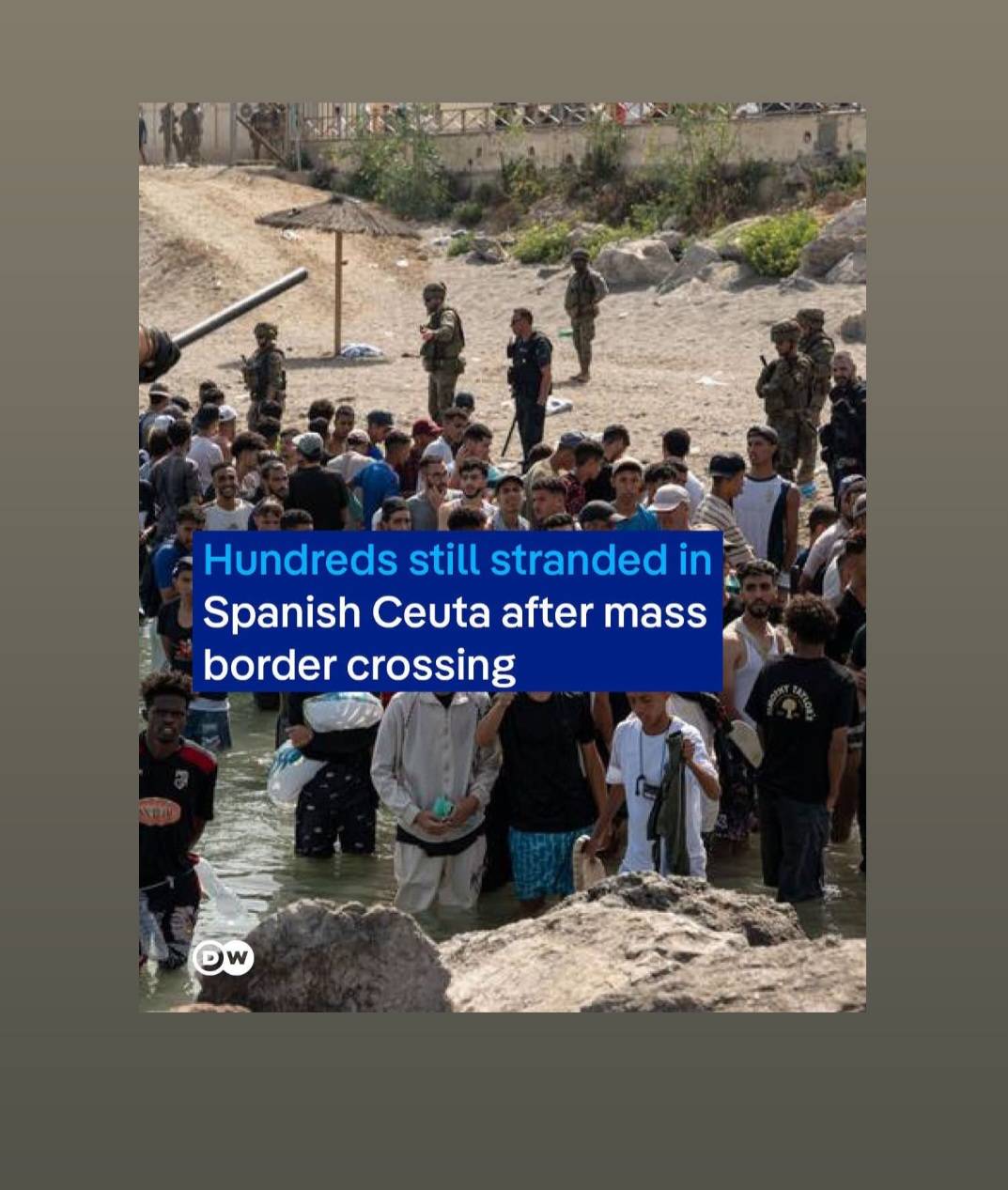
Hundreds of migrants remain stranded in the Spanish North African enclave of Ceuta days after an unprecedented mass crossing from Morocco.
Most of those who crossed were Moroccan nationals. Spanish authorities estimate that around 69,500 people have since returned to Morocco. The crisis has turned deadly, with at least 72 lives lost on the Spanish side and Morocco confirming 11 deaths on its side.
The surge triggered protests in Europe. Over the weekend, thousands of anti-migrant demonstrators gathered outside Morocco's diplomatic mission in Madrid, demanding stricter border controls. In Ceuta, residents say they feel abandoned by the Spanish government.
Morocco’s Interior Ministry has blamed the rush at the border on viral social media posts that falsely promised "open borders" and free passage into the European Union.
"They didn't think about the consequences"
Commenting on the situation, Ghanaian Blogger, Edrino Greatness told DW Africa that desperation fueled by rumors played a central role.
"They didn't think about the consequences but were happy to cross the border. Now they are stranded," he said.
DW Africa asked: With many people responding to false social media claims about open borders, what can be done to prevent similar crises?
Edrino Greatness: "The antidote has to be faster"
In response, Edrino Greatness said misinformation is putting the most vulnerable at risk.
"You're right, when people act on false 'open borders' claims or viral rumors, it can put vulnerable people in real danger," he told DW Africa.
He argued that the response to false information must match its speed.
"Misinformation spreads fast. The antidote has to be faster, come from trusted people, and be easy to understand. If rumors say 'borders are open', the response within hours should be a 30-second video from a trusted local leader, an embassy post, or a community message saying what's actually true in plain language."
Edrino Greatness outlined three priorities to prevent future crises:
1. Stop the spread of misinformation
This includes proactive fact-checking and rapid debunking of viral claims on platforms like WhatsApp, Facebook, and TikTok.
2. Give people real, accessible information
Governments, embassies, and organizations like IOM must provide clear, timely information on immigration laws and risks, distributed in local languages through channels people actually use.
3. Address the 'why' behind the risk
He noted that many take such risks out of desperation for jobs and opportunity. Long-term solutions must include creating economic opportunities and making legal migration pathways more transparent.
As authorities work to clear those still in Ceuta, the episode underscores how quickly online rumors can translate into real-world humanitarian emergencies.
See Images Below;


No comments yet
Be the first to share your thoughts!