



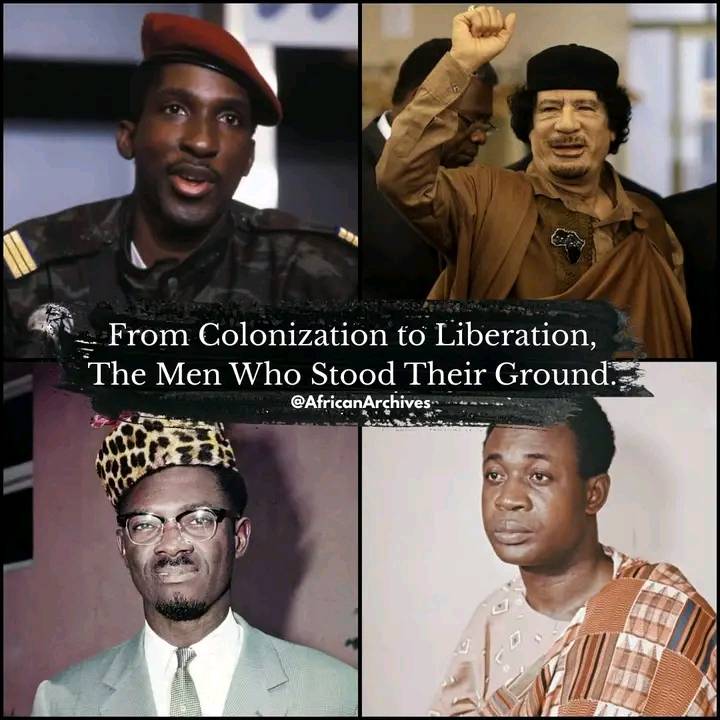
FOUR AFRICAN LEADERS, ONE CONTINENTAL STRUGGLE: THE QUEST FOR AFRICAN SOVEREIGNTY
Thomas Sankara, Muammar Gaddafi, Patrice Lumumba and Kwame Nkrumah came from different countries and generations, but they shared something important: a strong belief that Africa should have control over its own destiny.
Kwame Nkrumah led Ghana to independence in 1957 and became one of the biggest voices for Pan-Africanism. He believed that political independence meant very little if African countries remained economically dependent on foreign powers and divided among themselves. His dream was an Africa united, strong and capable of determining its own future.
Patrice Lumumba became the first Prime Minister of the independent Democratic Republic of the Congo in 1960. He wanted a united Congo that would genuinely belong to its people, free from colonial interference. His assassination in 1961 remains one of the darkest chapters in African history and turned him into a lasting symbol of the struggle against colonial domination.

Thomas Sankara, who led Burkina Faso from 1983 until his assassination in 1987, stood for self-reliance and national dignity. His government promoted education, healthcare, women's rights, environmental protection and local production. He challenged corruption and questioned Africa's dependence on foreign assistance.
Muammar Gaddafi ruled Libya from 1969 to 2011. He invested in African development initiatives, promoted continental unity and supported the idea of a stronger, more independent Africa. However, his leadership was also marked by authoritarian rule, political repression and serious human rights concerns.
These men were not perfect, neither did they share exactly the same political beliefs or methods. Their legacies deserve honest examination, not blind admiration.
But one thing remains clear: each became associated with a bigger question that Africa still struggles to answer today.
What does independence really mean if a continent cannot control its resources, economy, political decisions and future?
Perhaps that is the most important part of their legacy. Africa must not only celebrate its independence; it must also work towards making that independence meaningful.
No comments yet
Be the first to share your thoughts!