


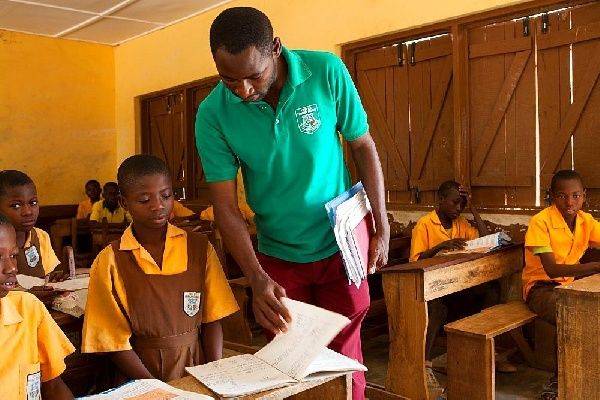
Dr Michael Boakye-Yiadom, Director-General of the University of Cape Coast's Institute for Educational Planning and Administration (IEPA), has challenged teachers to go beyond the traditional style of teaching by putting classroom teachings into practise.
He also urged that teachers make their lessons more inclusive and adaptable.
Dr. Boakye-Yiadom made the remarks at a two-day policy workshop co-hosted by the IEPA and the Ministry of Education on how to make education inclusive for all children.
The workshop, dubbed the Inclusive, Engaging, and Adaptive (IEA) pedagogies project, intended to gather input from the attendees, who were mostly recruited from the Ministry of Education, teacher unions, classroom teachers, and academics.
The IEPA will be able to go out into the field and conduct more research to corroborate or refute the participants' replies based on their responses.
As a result, the government will be better able to establish an action plan to address the country's inadequacies in delivering engaging, inclusive, and adaptable education for all children.
Solving the educational crisis
Dr. Boakye-Yiadom, speaking to media at the workshop's inauguration, stated that making education more inclusive and flexible was one method to address the educational system's learning issue.
He said that new academic practises and ways of teaching, often known as pedagogies, meant that if the students didn't appear to comprehend what was being taught, the professors should "practicalize" the lesson by sending the students outside the classroom, for example.
"Innovative pedagogies" means asking yourself what interventions you can use as a teacher to aid individuals who don't comprehend what you're teaching. What homework-based treatments can you provide for them? What one-on-one interventions can you devise for them so that we can bring everyone on board?'
He said the policy dialogue was part of the IEPA project's first phase, which was set to end in September this year, and that it would focus on primary school students, teachers, and principals, the Ministry of Education's Basic School Division, Circuit Supervisors, and personnel from the National Curriculum Research Development.