


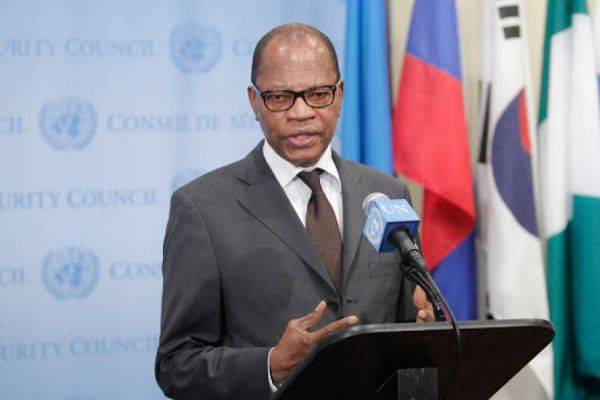
Dr Mohammed Ibn Chambas, a former United Nations (UN) Special Representative for West Africa and the Sahel, has chastised nations whose citizenry applauded military takeovers on the African continent.
He said that the removal of elected presidents, as witnessed in Gambia, Mali, and the Democratic Republic of Congo (DRC), posed a threat to the continent's democratic administration since such development weakened the basis, prompting citizens to fight back.
"In nations including Benin, Cote d'Ivoire, Ghana, Guinea, Niger, and Togo, eight of the fourteen national elections held in the area between January 2020 and March 2022 resulted in contested outcomes, resulting in bloodshed."
The rising turmoil around electoral processes has prompted fears about future elections in the region, but elections like the Gambia's recent presidential and parliamentary elections have given us hope for peaceful elections," he added.
Dr. Chambas stated this at a two-day stakeholders' workshop on the execution of the Electoral Violence Monitoring, Analysis, and Mitigation (ENAM) project held in Accra on Tuesday.
In five nations, the research covered 17 electoral processes and critical lessons learned (Senegal, Guinea-Bissau, Togo, Mali, and Guinea). Later, it was expanded to include five more countries: Niger, Burkina Faso, Benin, Ghana, and Cote d'Ivoire.
Representatives from the United Nations, the African Union, the Economic Community of West African States (ECOWAS), and the United Nations Office for West Africa and the Sahel (UNOWAS) were among those who attended.
The West Africa Network for Peacebuilding (WANEP) hosted the event to discuss and exchange project results, best practices, possibilities, and problems, as well as to encourage similar efforts aimed at contributing to peaceful elections in the region.
According to a study, Africa is one of the "most socially and economically unequal areas," with wealth and power concentrated in the hands of a few individuals.
He said that the rising number of jobless young was laying the groundwork for citizen mobilization that may turn violent, emphasizing that this unhappiness and frustration were felt most keenly by the weak and marginalized, notably women and youth.
Dr. Chukwuemeka Eze, WANEP's Executive Director, noted that current challenges to elections and democratic governance, exacerbated by electoral disputes, continue to jeopardize the foundations of democracies.
He said that the African continent was already beset by a slew of insecurity issues that needed to be addressed by leaders working together.
In a speech read for him, the Minister of the Interior, Mr. Abrose Dery, said Ghana was establishing a National Security Strategy to counter challenges that were possibly imminent.