


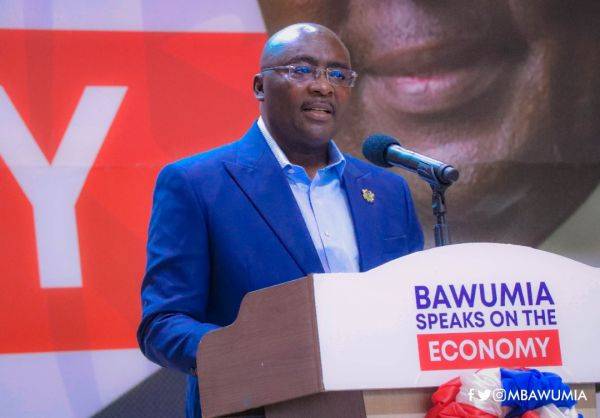
Internal Auditors have been instructed to leverage on government's digitization drive to uncover risks and deficiencies in public economic management to deliver timely recommendations and commendations to reduce corruption.
Vice President Mahamudu Bawumia provided the advice on Thursday in Accra at the 2022 Annual National Internal Audit and Governance Conference.
The Institute of Internal Auditors Ghana organized the conference, which had the subject "Elevating Impact in a Digitalized Economy," and allowed participants to exchange creative ideas and propose solutions for guaranteeing openness and accountability in public budgetary management.
Internal Auditors, Vice President Bawumia said, should regard themselves as digitization advocates in their particular organizations and assist maintain a healthy economy.
Internal auditors, he said, play a critical role in public financial management and protecting the public purse, and they should identify risks, opportunities, and control measures to keep the state from losing money.
"The profession of internal auditing has changed over time. Internal auditing approaches have evolved from a reactive, control-based approach to a more proactive, risk-based approach.
"This allows the internal auditor to foresee risks and opportunities and give assurance, advise, and insight as needed," Dr. Bawumia explained.
Building solid processes and institutions, he argued, will assist the government to promote efficiency and openness.
Dr. Bawumia claimed that government digitalization initiatives such as the National Identification System, which issued Ghana Cards to citizens, the National Digital and Property Addressing System, the Mobile Money Interoperability Payment System, e-ticketing, and the Ghana.gov portal were assisting in the fight against corruption and promoting transparency and accountability in the public sector.
He thought that bringing such organizations together would assist create the data needed to support decision-making and policy actions for faster national development.
The Vice President recommended boards and heads of institutions, both commercial and public, give the required training and IT infrastructure to enable internal auditors to offer value in a digitalized world.
In her welcoming comments, Mrs. Harriet Akua Karikari, President of the Institute of Internal Auditors Ghana, said the conference will allow internal auditors to exchange creative ideas and insights in order to enhance the profession and contribute their fair part to national progress.
To improve efficiency, she said the Institute had implemented digitalization and technological solutions in its operations and governance structures.
Artificial intelligence, data mining, and data analytics were all considered norms with a significant impact on how businesses operate, and thus could be used to improve public fiscal management and accountability, she said.
Mrs Karikari promised that the Institute would provide independent assessment to senior government officials to help them make better decisions in a digitalized world.