


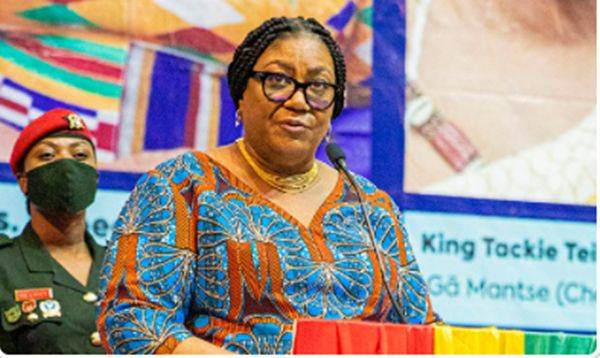
The First Lady, Mrs Rebecca Akufo-Addo, launched a study on "Cancer in Sub-Saharan Africa: A Lancet Oncology Commission" in Accra on Tuesday.
The report urges all stakeholders, particularly health authorities, to band together and define a collective response to Africa's rising cancer burden.
The Commission, which included national and international academic and healthcare specialists, proposed a framework that governments and non-governmental organizations can utilize to improve cancer care access, accelerate cancer prevention, and boost survival in Sub-Saharan Africa.
The Commission's Chair, Professor Wilfred Ngwa, stated that anticipated trends highlighted the devastating effects of inaction on cancer incidence rates and mortality in Sub-Saharan Africa.
Professor Ngwa stated that while the list of obstacles to successful cancer control in Africa is long. The pursuit of robust cancer registries, effective cancer control strategies, early cancer screening and detection, and the inclusion of palliative care into the cancer care pathway was crucial because the region was lengthy.
To significantly improve cancer care across the region, he advocated for a greater focus on telemedicine and new technology, as well as growing and educating the oncology staff and promoting cancer research.
"Digital health is already being implemented at a high rate, as witnessed in Nigeria and South Africa, particularly in cancer care, where tele-oncology has become a need for delivering remote chemotherapy monitoring, symptom management, and palliative care to many cancer patients," the Professor explained.
He advocated for better policies and infrastructure, as well as linguistics for all cancer patients, all of which were crucial to improving cancer outcomes.
Dr. Beatrice Wiafe Addai, a well-known cancer care advocate and co-chair of the Commission, emphasized that lowering the burden of cancer in Sub-Saharan Africa hinged on people's understanding and attitudes regarding cancer risk factors.
She believes that public health campaigns are an important aspect of any good cancer control program because they improve public knowledge of hazardous risk factors, healthy practices, and refute myths.
"At the same time, radical strategies for cancer prevention must be in place." Previous case studies have demonstrated that civil society organizations may collaborate with governments to develop scalable cancer awareness education programs that can run concurrently with other projects across Sub-Saharan Africa," she added.