


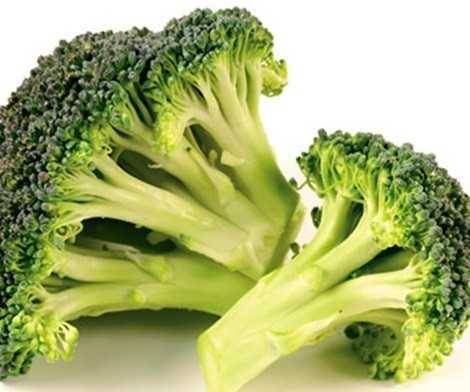
Broccoli is an edible green plant that belongs to the cabbage family, which is part of the wider Brassica oleracea plant family. The name broccoli is derived from the Italian plural of broccolo, which means "the blooming crest of a cabbage" and has many of the same nutritional properties.
According to University Health News Staff (2018), the stronger the antioxidant content of the vegetables, the darker and more vivid they are. Today, many distinct varieties of broccoli are cultivated and consumed all over the world.
According to Liu et al. (2018), broccoli florets have higher concentrations of amino acids, glucoraphanin, and neoglucobrassicin than other parts of the plant, whereas broccoli leaves have higher concentrations of carotenoids, chlorophylls, vitamins E and K, and phenolic acids than other parts of the plant.
Broccoli can be eaten raw or cooked; both are nutritious, but have differing nutritional profiles. Broccoli is affected by cooking methods (Yuan et al. 2009). Regardless, broccoli, whether raw or cooked, is a good source of vitamin C. (Hill, 2018).
Preventing cancer
Breast (Liu and K, 2013); prostate (Liu et al. 2012); gastric/stomach (Wu et al. 2013); colorectal (Wu et al. 2013); renal/kidney (Liu et al. 2013); and bladder (Liu et al. 2013) cancers have all been linked to cruciferous vegetables (Liu et al. 2012).
A more recent study by Kaiser et al.(2021) explains why Cruciferous vegetables are connected to a lower incidence of gynecological malignancies, demonstrating that their effects on estrogen are important for women.
Bahadoran et al. (2012) discovered that eating broccoli for one month reduced insulin resistance in persons with type 2 diabetes.
Suresh et al.(2017) showed lower blood sugar and less pancreatic cell damage in diabetic rats fed broccoli extract in a prospective animal research.
Two studies (Silva et al. 2013; Yu et al. 2014) demonstrated that increased dietary fiber consumption is connected to lower blood sugar and improved diabetes management due to the higher fiber content in broccoli.
Chromium, Broccoli
Broccoli is recognized as the food of choice for decreasing sugar levels due to its high chromium content. Two studies (Pei et al. 2006; Suksomboon et al. 2014) show that consuming chromium supplements can lower blood sugar levels.
Two other studies (Cefalu et al. 2009; Wang et al. 2010) shown that chromium supplements are effective for people who had high blood sugar and poor insulin sensitivity.
According to McIver et al. (2015), a large prospective research of nearly 62,000 people indicated that those who used chromium-containing dietary supplements had a 27 percent decreased risk of diabetes.
Despite the fact that chromium supplements reduce blood sugar levels, other trials lasting three months or more revealed no impact (Abdollahi et al. 2013).
Weight loss, broccoli
To acquire a thorough picture of whether this mineral is effective for weight loss, Tian et al. (2013) looked at nine separate research with 622 overweight or obese patients. The researchers found that the effects of this level of weight reduction was debatable, and that the supplement's usefulness remained unknown.