


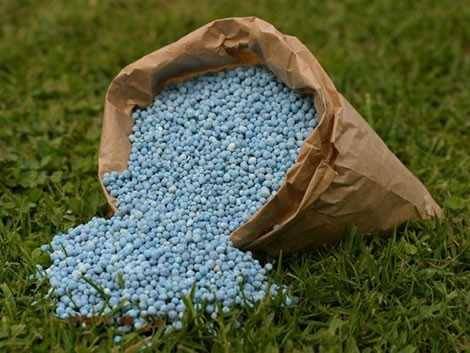
Because of the high cost of natural gas, which is the essential raw material for fertilizer manufacture, fertilizer manufacturing enterprises in Europe, the United States, and the United Kingdom have either shut down or severely curtailed their production capacity.
Yara, a large fertilizer company, indicated in the latter half of last year that it will reduce output due to "record-high natural gas costs in Europe."
The scenario is painting a bleak image of the world's food security crisis, not only in fertilizer-producing countries, but globally.
Prices that are too high
Ghana is completely reliant on imported fertilizer, thus a rise in world pricing or the absence of the item has a direct impact on us as a country.
A tonne of urea, which cost $300 at the start of the 2021 planting season, now costs more than $900, representing a 300 percent increase.
Farmers have been exposed to the benefits of fertilizer use thanks to the adoption of the flagship agricultural strategy, Planting for Food and Jobs. Subsidized fertilizer has, in fact, played a key role in increasing productivity and thereby ensuring food security.
Fertilizer consumption in Ghana was as low as eight kilogrammes (kg) per hectare before to the launch of the flagship program, compared to the current 28 kg per hectare, which, although considerable, is still below the required worldwide usage of 130 kg per hectare.
Inventive methods
The increase in fertilizer prices, as well as the near-complete absence of the item on the global market, is a call for Ghana to devise new ways to manage the shortage.
One of the greatest approaches is for the Ministry of Food and Agriculture to urge farmers to utilize organic fertilizer as a supplement to inorganic fertilizer, which is nearly out of reach for the average farmer.
Fertilizer made from organic materials
There are three types of organic fertilizer: solid, liquid, and granular. The remainder, with the exception of liquid organic fertilizer, is generally made locally.
Experts believe that the organic fertilizer is the best way to go because unlike the inorganic which leaves some residuals in the soil, which can lead to increasing the acidic nature of the land, the organic fertilizer decomposes leaving no residue behind.
Consequently, last Tuesday, the officials of the Ministry of Food and Agriculture, led by the Minister, Dr Owusu Afrieyie Akoto, held a discussion with 18 local fertilizer producers on ways to step up the production of quality organic fertilisers.
Rationale
The meeting was to enable the ministry to know what they are doing now, their production capacity and their projections for the years ahead so that based on that the ministry will be able to convert the quantities they are producing to acreages they can cover.
"Once we can determine that we have roughly 1.7 million hectares under maize and what they are producing can do 500,000, then we know there is still a deficit," Emmanuel Asante Krobea, the ministry's Technical Adviser, told the Daily Graphic.
Fertilizer made locally
Dr. Akoto, speaking at the conference, stated that local fertilizer companies were expected to create high-quality organic fertilizers on a wide scale for use by farmers.
Organic agriculture, according to the minister, has commanded a high price on the world market, thus mass production of high-quality organic fertilizers would reduce the country's reliance on chemical fertilizers.