


The Ghana Health Service (GHS) has refuted reports of two confirmed instances of monkeypox in the Central Region, calling them false and deserving of scorn.
The Deputy Regional Director of Public Health, Dr Kwabena Sarpong, reassured the public that no confirmed cases had been reported in the Assin-Fosu Municipality in the Central Region, but advised people to stay watchful and maintain personal hygiene.
He stated that the Service has increased monitoring to detect, manage, and implement the appropriate control measures in the event of an incident in the region.
Dr. Sarpong told the Ghana News Agency on Monday that it was critical for the public to adhere to hand hygiene standards and mask use, especially in confined areas, as the mechanism of transmission.
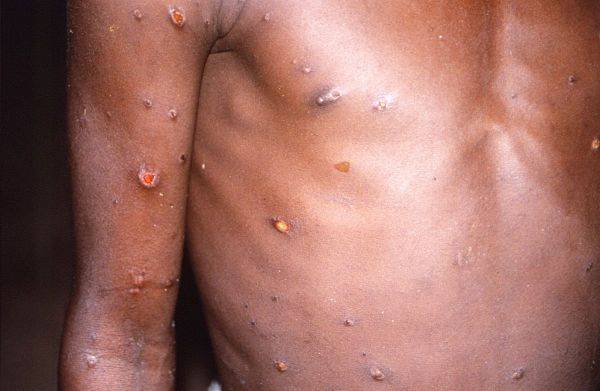
The early symptoms are similar to those of most infectious illnesses, such as fever, weakness, and chills, according to him, and monkeypox is suspected after the skin lesion appears.
However, he stressed the need of self-isolation when individuals are sick, especially if no investigations have been conducted to determine the cause.
Dr. Sarpong said that the condition might be contagious before symptoms are completely manifested, therefore patients should avoid direct contact with others once they have manifested those symptoms.
In 1970, a nine-year-old child in a rural section of Congo became the first reported human infection. Fever, body aches, chills, and weariness are the most common symptoms, but people with more serious infections may develop a rash and lesions on the face and hands that can spread to other areas of the body.
The incubation time was five to three weeks, although most patients recovered in two to four weeks without needing to be hospitalized.
Monkeypox was supposed to be more severe in youngsters and might be deadly for up to one in ten persons.
People who are infected with the virus are frequently given one of many smallpox vaccinations, which have been found to be effective against monkeypox, and antiviral medications are also being developed to combat the disease.