


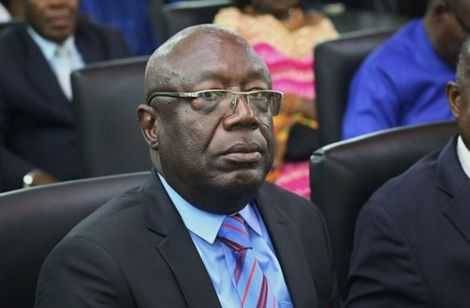
Dr Kwaku Afriyie, Minister of Environment, Science, Technology and Innovation (MESTI), has stated that banning the use of plastics in the country will be extremely difficult.
According to Dr. Afriyie, the country's current condition of plastics management necessitates a large-scale public awareness campaign to engage residents, companies, schools, hospitals, and other institutions in the battle against plastic pollution.
He announced this in Accra yesterday, as Ghana joined the rest of the globe in commemorating World Environment Day 2022, which was conducted under the global theme "Only one planet," with Ghana's tagline "Only One Earth, Beat Plastic Pollution."
During the Stockholm Conference in 1972, the United Nations declared June to be World Environment Day in order to raise public awareness and education about developing environmental challenges.
The day will also serve as a forum for individuals, communities, and governments throughout the world to come together and take action on the world's most pressing environmental issues.
Ghana's biggest issue, according to Dr. Afriyie, was the gathering and incorrect disposal of single-use plastics, also known as sub 20 micron plastics.
Every day, over 30,000 tonnes of municipal solid garbage are created, with just 14% collected, 38% thrown in open places, and 9% discarded indiscriminately, according to him.
Plastic trash, according to Dr. Afriyie, is becoming a huge socioeconomic and environmental concern that has serious consequences for biodiversity, tourism, infrastructure, fisheries, lands, and livelihoods.
"As a result of this situation, landscapes are littered with plastic waste, such as nose masks, grocery store plastic bags, disposable plastic cups, and takeout containers," he said. "Beaches and oceans are equally polluted, chemical uptake in both plants and animals due to indiscriminate disposal methods."
He stated that in order for Ghana to win the fight against plastic pollution, the ministry will divide the country into grades for effective collection, storage, and recycling of plastics in partnership with key stakeholder institutions and private sector partners.
He also mentioned that public and private collectors would be assigned to collect and store plastic waste, as well as a grid system to track the collection and storage of the plastics.
Dr Henry Kwabena Kokofu, the Executive Director of the Environmental Protection Agency, said that taking action on plastic trash was the only way to improve the country's waste management concerns in a speech read on his behalf.
He proposed solutions to the plastic problem and called on all players in the plastic main value chain to take steps to decrease the usage of plastic materials, particularly single-use plastics.
Dr. Kokofu advocated for the use of re-usable plastic materials in order to limit the amount of plastic trash in the environment, recover plastic waste for value addition, and educate families on waste separation for recycling.
"Those who pollute the environment with rubbish, particularly plastic waste, must be punished," he continued. "We must halt open burning of plastic waste, which emits hazardous chemicals into the environment, and repurpose it for other reasons."