

'Could You,' a non-governmental group, has petitioned the government to eliminate sanitary pad levies.
The government presently levies a luxury tax of around 33% and VAT on sanitary pads.
However, the NGO noted that the scenario is depriving girls in rural regions access to sanitary pads owing to rising pricing.
A box of sanitary pads that cost 5 Ghana cedis last year has doubled in price and now costs 10 Ghana cedis in 2022.
"Some females in the neighborhood sleep with men in return for money to purchase pads," Mary Akayini, a teacher at Asisiriwa D/A JHS, explains. They do this since the pad is so expensive."
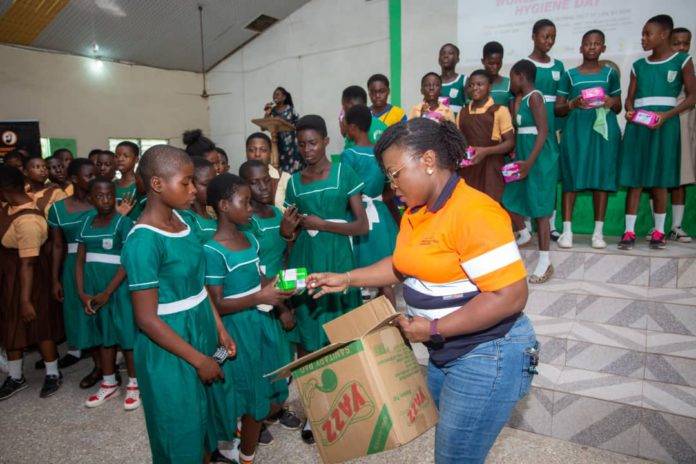
Could You donated 150 menstrual cups to some students in the Bosome Freho region as part of festivities to honor this year's World Menstrual Hygiene Day.
Could You Help Me?
Unlike sanitary pads, menstrual cups are reusable and can help ladies save money.
Could You contributed menstruation cups to Nsiah Princess two months ago, and she is one among the recipients.
"Now that I have a menstrual cup, I don't have to buy sanitary pads anymore, and I've been able to save a little money," she explained.
"Could You" asks the government to eliminate sanitary pad levies so that rural youths can afford them.
"We've been working with the girls in this neighborhood for over a year, and one issue we've discovered is that they don't have enough confidence in themselves."
Could You's Country Director, Kofi Kyeremateng Nyanteng, stated, "There is a shortage of access to period hygiene products and menstruation knowledge."
"Through our menstrual cups and education campaign, we're working with girls in rural areas to solve menstruation poverty." We want the government to eliminate taxes so that rural girls may afford it."
The project nurse, Anna Sefakor Afua Dotse, lectured females on the importance of using a menstrual cup.
"When compared to the pad," she claims, "the cup may survive for ten years."