


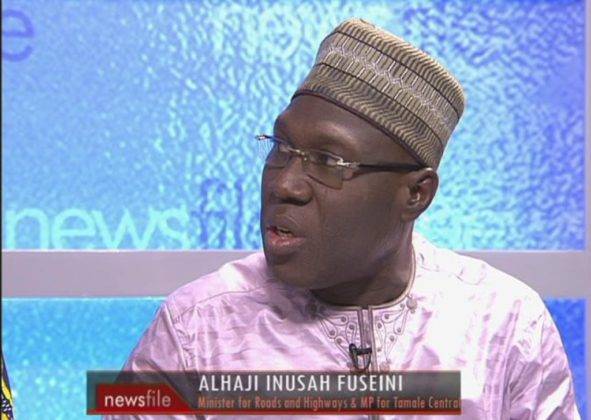
Inusah Fuseini, a former Member of Parliament for Tamale Central, claims that ex-gratia is not included in the Ghanaian Constitution.
According to him, ex-gratia refers to the retirement payments that Members of Parliament and other Article 71 officeholders are entitled to once they have served their term of office.
He stated on JoyNews' PM Express that calls for the elimination of Article 71 officeholders' retirement benefits are inappropriate since MPs and other Article 71 officeholders are contract workers who must get their retirement benefits at the conclusion of their term. "Ex-gratia, ex-gratia, ex-gratia, ex-gratia, ex-gratia, ex-gratia, ex-gratia, ex-gratia, ex- Ex-gratia is a term coined by common people and used to payments made to Members of Parliament. In the constitution, there is no provision for ex-gratia. According to the constitution, they are required to provide you retirement benefits."
He clarified that the retirement benefit is distinct from the pension program to which Members of Parliament subscribe.
While the pension program is based on intergenerational justice, the retirement payout is based on one's wage, he noted.
He claims that the practice is widespread over the world. "No, since you're a freelancer." You work for four years and then you're no longer employed. As a result, your retirement benefits will be computed using your pay.
"This isn't the case; the premise is completely different." It's all around the world, with the utmost regard. In fact, it's known as gratuity in the United Kingdom. It was even referred to as gratuity by the Apasera court.
He added, "Gratuity implies you're working, getting paid a salary, and when your contract finishes, they pay you a part of your income as gratuity."
He did agree, however, that the gratuity exclusively benefited government officials in the upper echelon. "I agree there is some type of conspiracy, and that is what is inciting people's outrage that you can't bring a class of people together and treat them equally." So, when His Excellency John Mahama was in charge, I recall this topic being taken very seriously, and he believed that the committee [Presidential Emoluments Committee] should be a permanent committee.
"It should not be done at the request of a sitting President." And you don't have to change the members every time there's a new parliament until you replace some who are deceased or can't perform, in which case they make decisions," he added.