


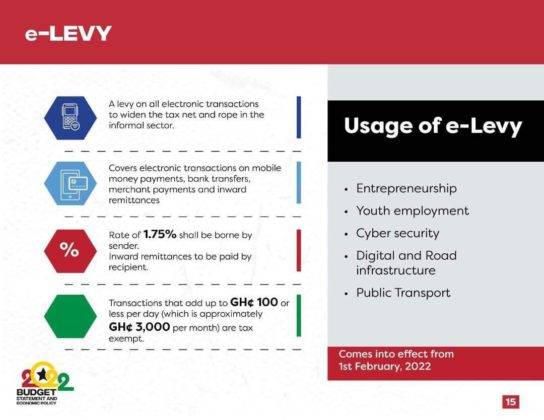
The Ghana E-Commerce Association asks the government to think about how the 1.5 percent Electronic Transaction Levy would affect their business.
The fee, according to the group, has raised the cost of doing business among its members, prompting E-commerce businesses to contemplate migrating to other West African nations with more favorable tax policies.
The Executive Director of the E-Commerce Association of Ghana, Paul Asinor, spoke to Joy Business on the occasion of Jumia's 10th anniversary and urged government to involve members in the industry before analyzing the impact of the e-levy in the mid-year budget presentation.
"We don't want to see a situation where the government keeps raising the E-levy because it's a quick method to get cash." We want to put a stop to it right now in the budget because it will have an impact on our business. Businesses would progressively cut their investment and seek outside where operations are less costly if the cost of doing business continues to rise, he added.
Mr. Asinor raised concern that the Ministry of Finance did not consult major e-commerce players before enacting a sensitive tax policy like the e-levy.
"In fact, we believe the government should engage us to discuss a variety of problems that impact the industry." This e-commerce sector is a thriving industry that can bring the government a lot of money if operations are improved."
In his remarks, he emphasized the importance of a national policy that will help the e-commerce sector grow and generate money for the government.
Many people believe that enterprises that operate online do not have to pay taxes, according to him.
"This is a lie since internet enterprises may simply be monitored and forced to pay taxes." He emphasized, "I just informed you about the e-levy and how it affects our business."
In response to certain internet employees' terrible working circumstances, Mr Asinor remarked that plans are in the works to learn from best practices in other countries.
"We are aware of the poor pay that online employees get, and we are working with the appropriate parties to address this." We'll finish our proposals shortly and submit them to the government for consideration in developing a long-term policy," he added.