


Hundreds of ex-soldiers who were ordered to protect Srebrenica during the Bosnian conflict have received an apology from the Dutch government.
The forces were underequipped to halt the atrocity, according to Prime Minister Mark Rutte, and were ordered to do a "impossible mission."
After Dutch soldiers were overpowered by Bosnian Serb troops in July 1995, 8,000 Muslim males were killed.
Previously, Dutch administrations have claimed that the UN was to blame for the lack of air help.
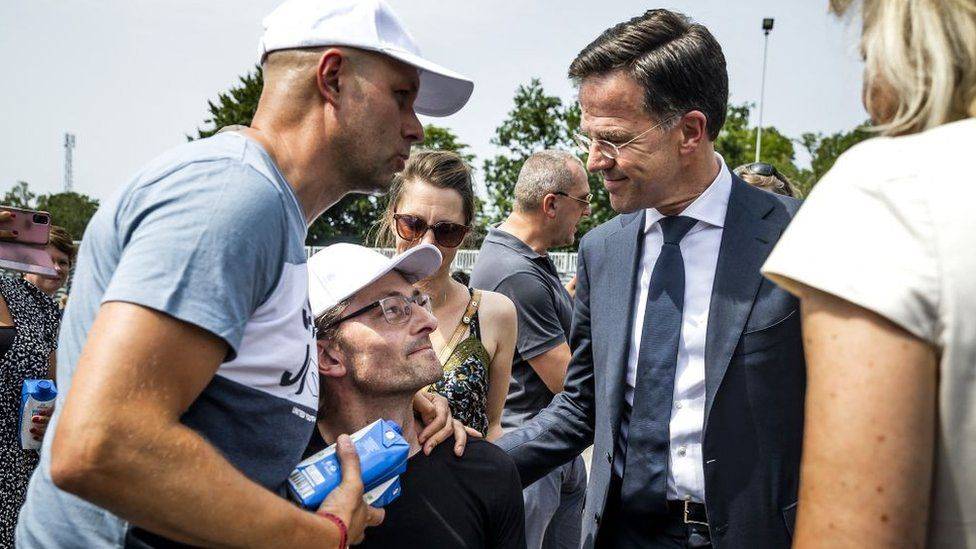
Mr Rutte, speaking to veterans at a military base in central Netherlands on Saturday, admitted that the Dutchbat III peacekeeping force struggled because "your mandate, your equipment, and the military support you received during your mission were all inadequate" for a mission "that ultimately proved impossible to carry out."
"Today, on behalf of the Dutch government, I apologize to all the women and men who served in Dutchbat III. To everyone present, as well as those who aren't able to join us today, "Mr. Rutte addressed veterans.
"With the deepest admiration and respect for the way Dutchbat III persevered in attempting to do the right thing under extremely difficult circumstances, even when it was clear that it was no longer feasible."
In addition to the apology, Defence Minister Kajsa Ollongren presented the Bronze Medal of Honour to soldiers sent to Srebrenica.
Thousands of Muslims escaped to a UN safe zone in Srebrenica in July 1995, fleeing a genocidal campaign by Bosnian Serb forces. They were guarded by Dutch troops who were rather lightly armed.
After obtaining the surrender of the Dutch soldiers, Bosnian Serb troops led by General Ratko Mladic separated men and boys aged 12 to 77 for what they called "interrogation."
Mladic's army murdered the men and buried them in mass graves over the following five days.
Serbia has consistently disputed that the killings were part of a genocidal campaign, but acknowledges that they were a crime.
Mr Rutte's apology comes a year after a commission issued a set of suggestions on how to help the 850 Dutchbat III troops, many of whom suffered from PTSD as a result of their wartime experiences.
In addition, the Dutch Supreme Court found in 2019 that the Netherlands was partially responsible for the deaths of the victims.