


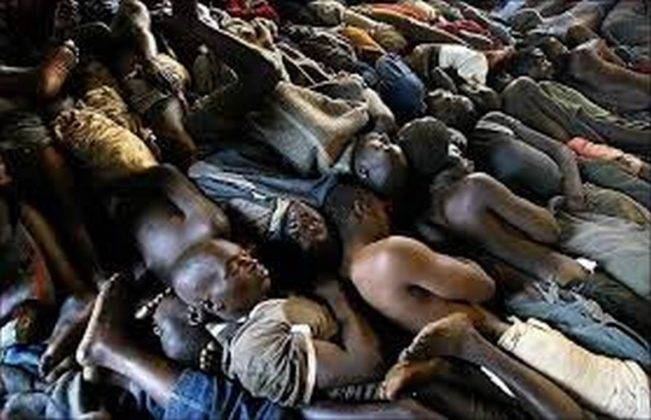
Everyone has the potential to end up behind bars, but practically everyone who is free forgets that we must band together to demand that all prisoners in this nation be treated like human beings.
Numerous reports have shown that inmates are treated inhumanely in our region of the world, and many ex-offenders have corroborated this, citing, among other things, the intolerable overcrowding, the inadequate meals, and the lines for the restroom.
Since thousands of people who have been held in various jails around the nation are currently on remand, delays in the administration of justice have only made matters worse.
This is incredibly unjust since it subjects people who haven't been found guilty of the crimes they're accused of by a court with the necessary authority. In Ghana, there are 47 prison facilities, including 12 large male prisons.
By substantially exceeding the national allowable number of 9,945 prisoners, the Ghana Prisons Service has 14,097 as of May 2, 2022.
In a speech read on his behalf at a recent training session for court reporters in Accra, Mr. Isaac Kofi Egyir, Director-General of the Ghana Prisons Service, said that the issue of overcrowding remained a challenge for the service because many prisoners competed for the scarce resources at the various prisons throughout the nation.
He claimed that the Justice for All Program has somewhat decreased the jail population congestion, which had increased from 72.41 percent in 2007 to 35.11 percent as of September 27, 2021.
The resources at the different jails are still severely insufficient, notwithstanding this minor increase.
Numerous requests for the government to adopt the non-custodial sentencing bill into law, made by certain NGOs like the Crime Check Foundation, appear to have been ignored. This is likely because authorities in Ghana can never place a high priority on improving the situation of prisoners.
The congestion in the different jails might be greatly reduced with the use of alternative punishment for those who commit minor offences.
The infrastructure of the jails must be improved, and this work must be scaled up by institutions and philanthropists.