


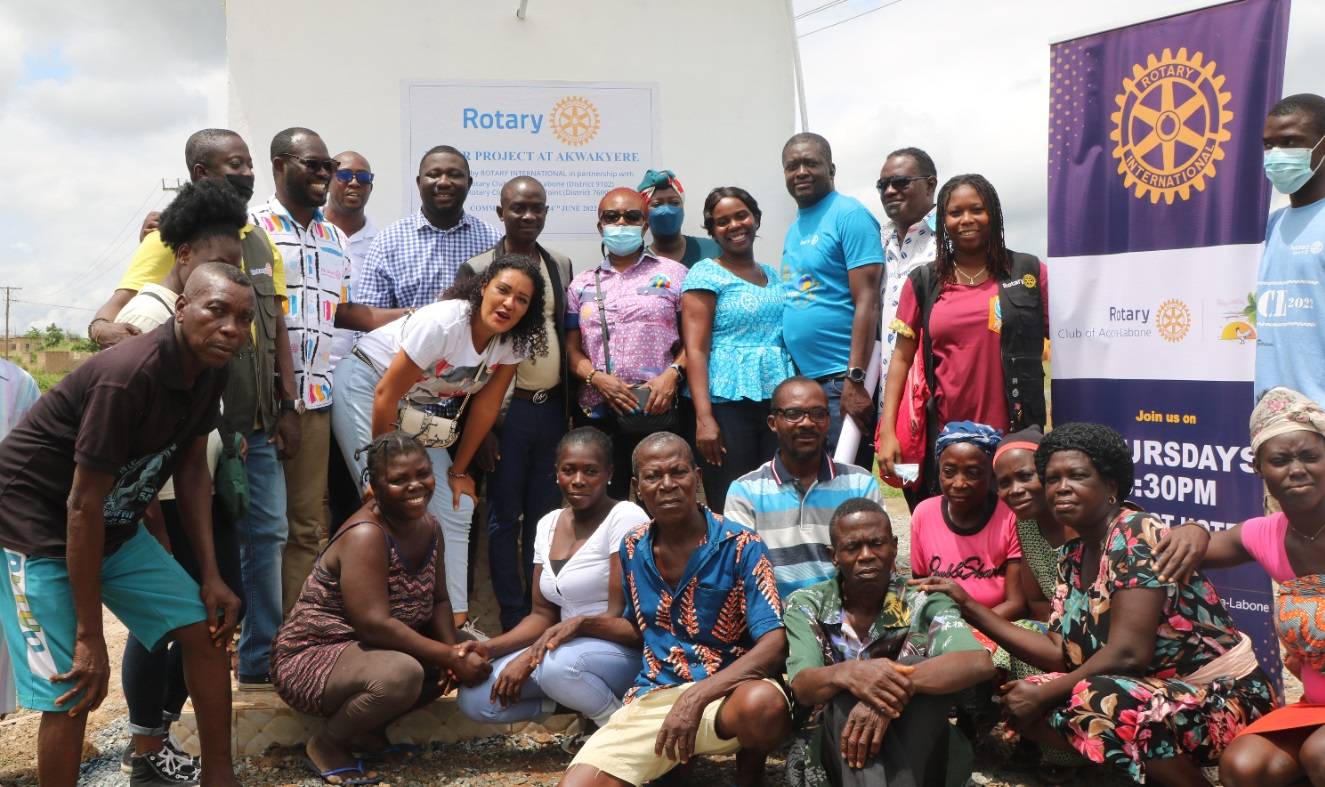
As part of an initiative to provide clean drinking water for underserved areas, the Rotary Club of Accra-Labone has funded three boreholes for three settlements at Amasaman in the Ga West Municipal District of the Greater Accra Region.
The Akwakyere, Skido, and Akramoman/Kramokrom communities are the beneficiaries.
In collaboration with the Rotary Clubs of Accra Labone (District 9110) and Oyster Point, Rotary International provided funding for the water facilities that were inaugurated on Friday, June 24, 2022. (District 7600).
Project
The president of the Rotary Club of Accra-Labone, Emmanuel Anum Mensah, stated in an interview following the inauguration of the three projects that a total of nine boreholes will be built as part of the club's borehole project at a cost of $49,000.
The remaining six, including one in Kpandai and five in the Ga West District of Accra's impoverished neighbourhoods, will also be commissioned before the year is up, according to Rotarian President (RP) Mensah.
According to RP Mensah, "We're doing nine boreholes for this Rotary year; three are ready, and that is what we are commissioning."
He said that after a requirements analysis was carried out to ascertain the community's needs, the beneficiary communities were chosen.
"We opted to complete this project for them since we had witnessed how poorly maintained the places were where they got their water. The remaining six are also being drilled and will shortly be put into service "said he.
Each borehole, with with the related taps and tanks, cost 40,000 cedis to build, according to Dr. Frank Owusu Adjei, chair of the Rotary Club of Accra-service Labone's project.
He predicted that by the end of July, all the boreholes will be finished.
The three villages' people were advised by the former president, Kwaku Tweneboah Ofosu, to form water committees in order to guarantee the longevity of the borehole facilities.
Excitement
Solomon Yaw Atsu, an assemblyman from Kwahiekuma, claimed that the initiatives will provide relief for his neighbours who now have to travel great distances to obtain water from unclean sources.
Because they were largely farmers and small-time traders, he said that the people of the villages could not afford to buy potable water. Additionally, Mr. Atsu gave the assurance that the localities have established management committees that would decide on a nominal price for borehole upkeep.