


The development of 67 business resource centres (BRCs) nationwide has significantly advanced the nation's industrialization programme.
They were established by the Ministry of Trade and Industry as part of the Rural Enterprises Programme (REP) to aid One-District, One-Factory (1D1F) businesses in their expansion and competitiveness.
The BRCs offer business development services such business opportunity discovery, business plan creation, facilitation of access to credit and financing, and business health checks, also referred to as business diagnostics.
Other services offered include management and entrepreneurial training, company counselling and consulting services, productivity development programmes, and institution capacity building.
Private companies will administer the BRCs, which are to be operated as for-profit organisations. This is done to guarantee the long-term viability of centre operations and facility upkeep, as well as the aggressive and strategic promotion of commercial activities across the nation.
37 of the 67 centres are currently open and equipped with amenities such lobby spaces, staff offices, business centers/cafés, conference/training rooms, small meeting rooms, and showrooms.
To assist information and communication procedures, all BRCs are outfitted with information and communications technology (ICT) tools and connected to standby generators, solar power, and boreholes.
The International Fund for Agricultural Development and the African Development Bank provided funding for the creation of the BRCs (AfDB).
Launch
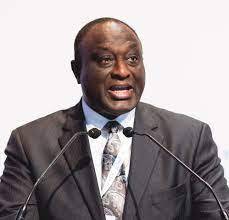
Alan Kyerematen, the Minister of Trade and Industry, remarked yesterday at the BRCs' introduction in Accra that several nations, Particularly in Europe, North America, and Asia, economies had prospered by placing more emphasis on creating solid MSMEs that had evolved from family-owned firms into multinationals.
"Because of their lack of access to natural resources, the great countries of the globe are not where they are. According to him, Africa would be the richest continent while Singapore and South Korea would be the world's poorest nations.
"Those nations are fantastic due to their dedication to the advancement of entrepreneurs. There are businesses with yearly turnovers higher than Ghana's GDP, "Added he.
He pointed out that many MSMEs in the nation have been unable to benefit from trade deals made with major foreign economies. owing to a number of difficulties, including the high cost of finance, poor manufacturing and retail infrastructure, slow adoption of new technologies, and insufficient market knowledge.
The trade minister stated that against this backdrop, the ministry has been carrying out a thorough industrial transformation programme since 2017 in an effort to convert the nation into the new manufacturing powerhouse in Africa.
Programs like the realignment of REP to provide complete assistance for MSMEs and 1D1F enterprises have become required, according to Mr. Kyerematen, in order to realise that industrial aim.
He stated that in order to set Ghana on the correct course, three major issues, including unemployment, poor revenue mobilisation, and a lack of persistent input of foreign cash, needed to be addressed.