


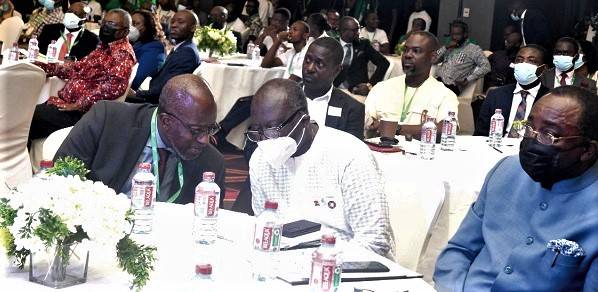
A forum for advocacy has been launched to assist in addressing the country's agribusinesses' financial issues. The Agriculture Stakeholder Convening Platform is an effort that aims to reduce the risk associated with agricultural finance so that banks can offer enough credit to the agricultural and agribusiness sectors.
The Ghana Incentive-Based Risk-Sharing System for Agriculture Lending (GIRSAL) inaugurated the project yesterday[June 29, 2022] in Accra to help financial institutions better understand the agriculture industry, as well as its value chains, prospects, and dangers.
Due to certain banks' hesitation to extend loans to members of the agricultural industry because they view the industry as a dangerous business, this has become required.
Unmet needs in a sector
In his remarks to attendees at the opening, Minister of Finance Ken Ofori-Atta stated that the agricultural sector was under-served in terms of loan disbursement
He said that according to Bank of Ghana data, the sector had only gotten 3.4% of the overall share of credit as of June 2021, down from 5.2% in June 2020.
Therefore, the minister said that GIRSAL was established by the government to aid in the de-risking of agriculture and to encourage banks to lend to the industry.
Agriculture needs far more funding than it currently receives if it is to be handled like a business, he continued.
seed money
According to Mr. Ofori-Atta, the BoG gave GH200 million in seed money for the GIRSAL credit guarantee programme, along with GH10 million in operational assistance. The Ministry of Finance also contributed GH13.6 million as seed capital.
The minister added that GIRSAL had collaborated with 22 financial institutions and had signed partnership agreements with them. Since its inception, GIRSAL has guaranteed loans totaling GH600 million, benefiting 87 agribusinesses through input supply, production and processing, marketing, and export.
"We cannot continue to be an import-dependent country. We are estimated to have spent up to GH6.8 billion between 2017 and 2020 on importing well-known everyday goods like rice and tomatoes, among others.
"Around GH3.9 billion worth of fish and GH1.9 billion worth of poultry were imported at that time," he added.
The minister said that through promoting commercial farming to draw educated young into the industry, the government will pay greater attention to agriculture, particularly food processing and import substitution.
To drastically reduce our dependence on goods from abroad, we must advance in these areas. We must protect our foreign exchange resource, improve food security, and generate quality employment, according to Mr. Ofori-Atta.
For their collaboration and forethought in establishing GIRSAL, he praised the MoFA and the BoG.
Concerns
Dr. Owusu Afriyie Akoto, the minister of food and agriculture, raised concern about the refusal of some banks to fund agriculture, particularly poultry farmers, which he claimed was harming the poultry business.
He said that in order to boost production, the government had spent GH2.6 billion over the previous five years subsidising seeds and fertiliser for farmers.
Kwesi Korboe, the chief executive officer of GIRSAL, stated that the platform will include multi-stakeholder groups to launch and advance talks on key problems impacting the agriculture sector's efficacy and efficiency.
According to him, it would also draw attention to possibilities and suggest ways to address problems in the industry.