


Three economists have encouraged the government not to forsake its social intervention programmes intended to economically empower the poor, as official negotiations with the International Monetary Fund (IMF) for economic help are anticipated to begin tomorrow.
This is a result of worries that the Bretton Woods organisation would pressure the government to abandon its pro-poor initiatives as part of steps to reduce spending until the economy is back to its former glory.
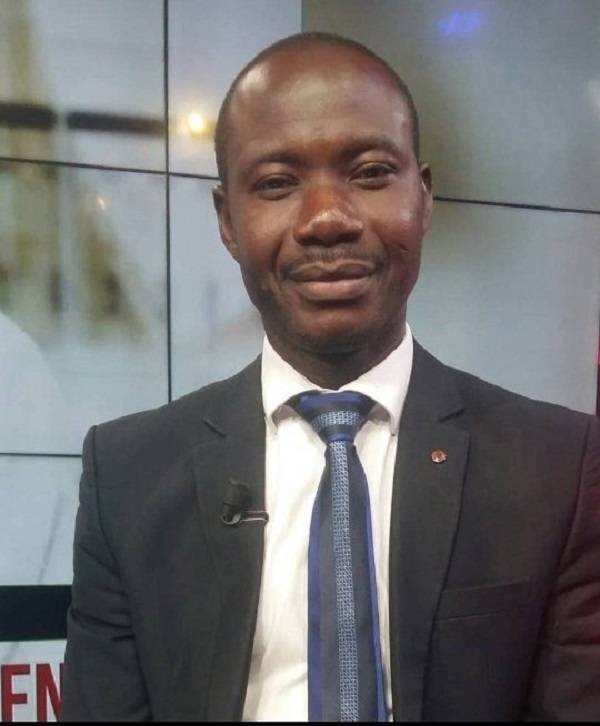
The economists are Dr. Said Boakye, Head of Research at the Institute of Fiscal Studies (IFS), Dr. Adu Owusu Sarkodie, Economics Lecturer at the University of Ghana, and a Fellow of the Institute of Fiscal Studies.
Dr. Sam Ankrah is a Chartered Economist in Ghana (ICEG).
Dr. Adu Owusu Sarkodie, an economics lecturer at the University of Ghana, advised the government to be resolute in its conversations and negotiations and not to compromise its social intervention programmes in separate interviews with the Graphic Business.
He argued vehemently that any action taken to sacrifice the social intervention programmes would worsen the economic situation for the populace.
The main issue, according to Dr. Sarkodie, with approaching the IMF is the social intervention programmes and the possibility that the IMF would order the government to halt some of them. However, he continued, "the government should be able to explain why that cannot be done."
"Some social intervention programmes, like as the free senior high school programme, Nation Builders Corps (NABCo), and teacher and nurse training allowances, may be impacted, but in my opinion, those social intervention programmes are necessary during difficult economic times like these. These are some of the reasons, he said, that the government should strive to bargain with the IMF to prevent the cancellation of programmes that aid the poor and those in need.
only possible choice
Despite not being a supporter of IMF programmes, Dr. Adu Sarkodie stated that they were now the greatest alternative for the nation.
He asserted that the government currently needs an IMF programme to assist stabilise the macroeconomic situation, pump some cash into the economy, and help with policy credibility.
Domestic resource mobilisation, according to him, is the country's economic downfall. He said that since the nation left the initiative for heavily indebted poor countries (HIPC), it has not taken domestic income mobilisation seriously.
"The rate of public debt increase has consistently surpassed the rate of domestic income growth. "You cannot develop a country with such domestic revenue growth rate," he stated of the present domestic growth rate, which is roughly 4%.