


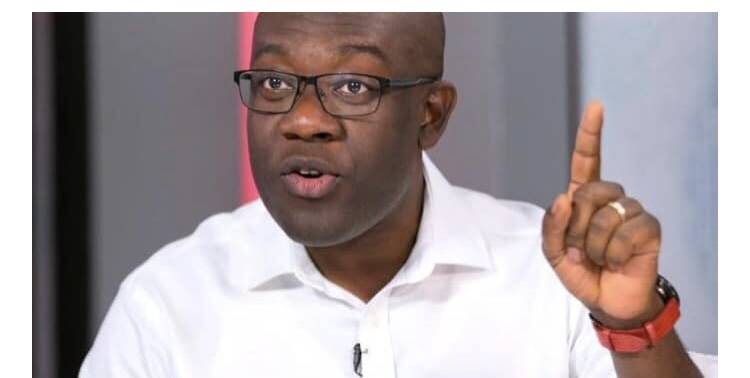
The Minister of Information, Kojo Oppong-Nkrumah, has given a breakdown of the first phase of engagement between Ghana and the International Monetary Fund (IMF).
When asked about how the government intends to negotiate with the IMF to minimize its expenditure during an interview on Citi news, Mr. Oppong-Nkrumah explained that the first part of the engagement will entail the presentation of data on the government’s policies and programs.
He said the international organization will determine a suitable program to support the country’s economy after the presentation. According to the Ofoase-Ayirebi MP,
based on the programs presented to Mr. Oppong-Nkrumah explained that the first part of the engagement will entail the presentation of data on the government’s policies and programs.
He said the international organization will determine a suitable program to support the country’s economy after the presentation. According to the Ofoase-Ayirebi MP,
based on the programs presented to the IMF, they may decide to assist Ghana through the Extended Credit Facility (ECF) or the Standby Credit Facility (SCF).
“The first part of the IMF engagement is to look at the data to determine which kind of program is good for Ghana because, as we mentioned, the IMF has several programs, so as they are coming to town on Wednesday, what we are going to do is share all the data and then come to a certain understanding. Is it ECF we are going for, or is it a standby facility we are going for? What is it? By that time, when we are done with that one, and we begin to negotiate with the details, the president would have
signed on to the details of the balancing we want to achieve. “
The Standby Credit Facility (SCF) provides financial assistance to low-income countries with short-term balance of payments needs. The SCF was created under the Poverty Reduction and Growth Trust (PRGT) as part of a broader reform to make the Fund’s financial support more flexible and better tailored to the diverse needs of LICs, including in times of shocks or crisis.
Under the SCF, member countries agree to implement a set of policies that will help them achieve a stable, sustainable macroeconomic position in the short term. These
commitments, including specific conditions, are described in the country’s letter of intent. SCF-supported programs should be aligned with a country’s poverty reduction and growth objectives, and SCF arrangements with an initial duration exceeding two years require a Poverty Reduction and Growth Strategy (PRGS) to be made available for completion of the second and subsequent reviews.
Also, the Extended Credit Facility (ECF) provides financial assistance to countries with protracted balance of payments problems. The ECF was created under the Poverty Reduction and Growth Trust (PRGT) as part of a broader reform to make the Fund’s financial support more flexible and better tailored to the diverse needs of low-income countries (LICs), including in times of crisis. The ECF is the Fund’s main tool for providing medium-term support to LICs.
ECF financing is determined on a case-by-case basis, taking into account the country’s balance of payments needs, the strength of its economic program, and capacity
to repay the Fund, the amount of outstanding Fund credit, and the member’s record of past use of Fund credit, and is guided by access norms.
This means that whichever program the IMF decides to help us with, Ghana risks losing some of the government’s flagship programs. So far, the Akufo-Addo government, since it assumed office in 2016, has implemented some developmental projects to transform Ghana’s economy.
President Akufo-Addo has, among other things, implemented the Free SHS program, the One-District-One- Factory, NABCO, and the Obantapa project. The Ghana CARES (Obaatan pa) program is a GHȻ100 billion post-COVID-19 program to stabilize, revitalize and transform Ghana’s economy to create jobs and prosperity for Ghanaians over three years the government.
Again, your start initiative intends to create one million jobs in the next three years. Some Ghanaians fear the decision to go to the IMF for a bailout could have dire consequences for some state policies. But Mr. Oppong Nkrumah says the government will negotiate to protect its policies.
He explained that international organizations can only suggest programs to the government to scrap, but the onus falls on the government to decide whether to pay heed to their suggestions.
“The task force is chaired by the president and his fiscal policy manager, and the team is bringing the necessary proposal to the table. The president has set the framework that there are things that must be protected, but we do understand that there will be a need for some rationalization measures, so it is a balancing act between the two. How do you ensure that the most important things are protected while at the same time ensuring that rationalization takes place? It is a balancing act in the middle. Let’s allow the team to do the work and bring it to the president and let him have the opportunity to sign off. “