


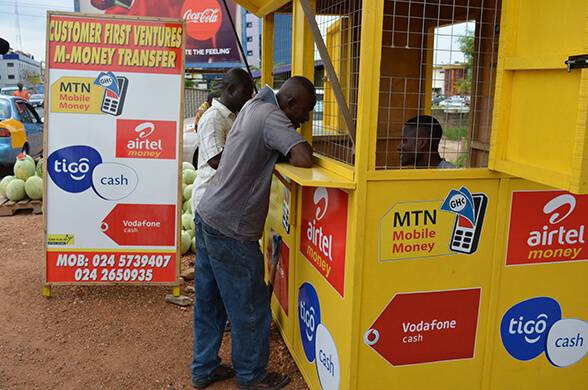
Despite applying to the International Monetary Fund (IMF) for financial help, the administration has stated that it will keep the 1.5 percent surcharge on electronic transactions.
This information was provided in a statement released by the Ministry on Tuesday in response to important inquiries about the government's continued involvement with the Fund.
Regarding the contentious tax, the Ministry clarified that the government will supplement its assistance from the IMF with tax revenue in order to save the economy.
The Ministry said "NO. " when asked if the fee will be eliminated. IMF financing will be used to help Ghana's balance of payments (i.e. to shore up the international reserves).
In order to ensure that the government can continue to support its developmental goals without the assistance of the IMF, as well as to ensure that the tax-to-GPD ratio rises to the peer range of 16 to 18 percent, the government is committed to ensuring the smooth operationalization of all taxes, including the e-levy.
"An IMF-supported programme is likely to motivate the government to study the causes impeding the implementation of the e-levy (including by offering technical assistance if needed) and come up with ideas to enhance it," the statement read.
The Finance Ministry also mentioned that over the medium term, more tax measures may be taken into consideration.
According to this information, despite the general public's opposition to the scheme, Ghanaians would continue to pay the charge.
However, the tax plan, which went into effect on May 1, has not provided the government with the anticipated amount of money.
The tax has only produced fewer than 20% of the profits it was intended to, according to Gabby Otchere-Darko, a prominent member of the ruling New Patriotic Party.
The predicament is what compelled the nation to turn to the IMF for a bailout.
In order to start such discussions with the government, a delegation from the International Monetary Fund (IMF) is scheduled to land in Ghana on Tuesday, July 5.
During their visit, the IMF representatives—which will include senior executives from the Fund and local staff—will meet with the Finance Ministry, the Economic Management Team, and the Presidency.
However, the tax plan, which went into effect on May 1, has not provided the government with the anticipated amount of money.
The tax has only produced fewer than 20% of the profits it was intended to, according to Gabby Otchere-Darko, a prominent member of the ruling New Patriotic Party.
The predicament is what compelled the nation to turn to the IMF for a bailout.
In order to start such discussions with the government, a delegation from the International Monetary Fund (IMF) is scheduled to land in Ghana on Tuesday, July 5.
During their visit, the IMF representatives—which will include senior executives from the Fund and local staff—will meet with the Finance Ministry, the Economic Management Team, and the Presidency.