


Some school administrators and parents are frantically pleading with the government and the general public for food donations to help feed pupils at public second-cycle schools.
This is a result of the schools' insufficient access to food supplies. The Daily Graphic conducted checks in certain schools in Accra, Cape Coast, Kumasi, Bolgatanga, and Ho, and found that although some were happy with their food supplies, others faced grave circumstances.
Parents said that although school administrators used the little resources at their disposal to control the situation, pupils were provided food that was of low quality.
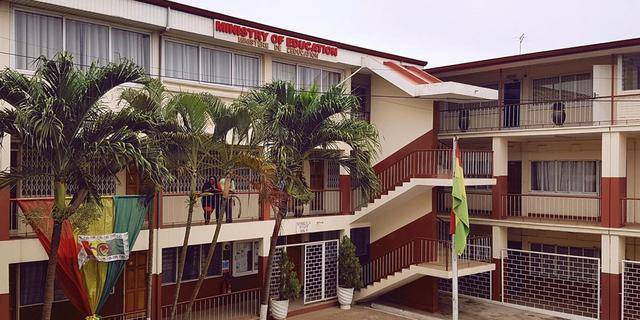
The Ministry of Education said, however, that it had not received any formal complaints about the food shortage from the schools and that it would be grateful if a list of the impacted schools could be supplied so that appropriate action could be taken.
Students in Cape Coast mourn
Shirley Asiedu-Addo and Edith Mensah write from Cape Coast that several pupils from Mfantsipim School, St. Augustine's College, Adisadel College, and Ghana National College said they skipped the meal because the food was insufficient in both quantity and quality.
A student at Mfantsipim commented, "The porridge is too light and without bread therefore in the morning I don't go to the dining hall." Another student said, "The quantity is sometimes little." Rev. Ebenezer Aidoo, the headmaster of Mfantsipim, stated that despite the acute need for food, administration was doing everything in its power to feed the kids.
Henry Arthur-Gyan, the headmaster of St. Augustine's, said that the institution had no choice but to handle the circumstance. We make do with what is available since we are aware that there are difficulties. We can't really do anything about it," he remarked.
A source at Adisadel who requested anonymity claimed that supplies were not as plentiful as they once were. According to the statement, "We are feeding the pupils what we are given." According to Joseph Ato Sarpong, the headmaster of Ghana National, supplies from the Ghana Buffer Stock Company were frequently late.
He said that there was just not enough food to serve the students.
"We had a hard time feeding Form One pupils since they arrived over a two-month period. We are making an effort, but it has been difficult with the pupils in forms two and three as well. For management, it's a challenging scenario, he lamented.
Mr. Sarpong emphasised that although attempts had been made to persuade the authorities to take immediate action, the school had not gotten a positive response from the supplier of the food products.
SOS signal
The Parents Association (PA) Chairman of Mfantsipim, Monister Kwarteng, stated in an SOS audio message to parents that the situation in the school was not good at all and hoped that parents were in the school to witness things for themselves.
He explained, "Our sons are drinking koko without milk and bread, and the food they are consuming is too abhorrent." He claimed to have witnessed the headmaster using his own funds to buy a few bottles of oil.
"Dear parents, these are our lads, and the Parents Association has less than GHC $1,000 in its bank account. What is this good for? He probed.
The situation, according to Mr. Kwarteng, is really dire, and anyone who can give goods—such as sacks of rice, flour, and oil—should do so to assist solve the issue.
zero bread
According to Rev. Fr Stephen Owusu Sekyere, the Ashanti Regional Chairman of the Conference of Heads of Assisted Secondary Schools (CHASS), the majority of schools in the region are struggling with a lack of food supplies, with vegetables, palm oil, sugar, and bread posing the most problems.
The Opoku Ware School's (OWASS) Headmaster, Rev. Fr. Sekyere, once remarked, "Students arrive to the dining hall with their own sugar. However, we've been getting by with what we have, and when it's done, we wait for the creditors. "I sometimes have to dip into my wallet to buy some of the products from the open market simply to make sure that the kids are okay," he added. "I don't want the students to demonstrate during my term."
He occasionally stated, "We get roughly five gallons of oil, which do not last two weeks for a student population of nearly 3,000," when the supply arrived.
You can only imagine what people in the hinterlands are going through, he said, "and this is even for schools in the city."