


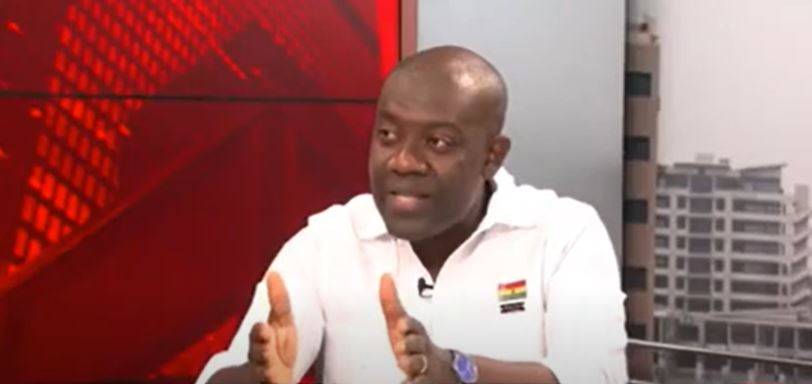
Kojo Oppong Nkrumah, the minister of information, has reaffirmed that the government respects the right to free speech and expression guaranteed by Article 21(1) of the 1992 Constitution.
In answer to a query from Mr. Vincent Ekow Assafuah, Member of Parliament (MP) for Old Tafo, Mr. Oppong Nkrumah said on the floor of Parliament, "In fact, as we have always said, we prefer nasty noises than a culture of quiet."
On behalf of Mr. Assafuah, Mr. Carlos Kingsley Ahenkrah, the MP for Tema West, questioned the Minister on the initiatives the Information Ministry was putting in place to encourage decorum and sanity on the country's airwaves.
"We accept that our media today is challenged with a variety of issues that have hindered its performance," Mr. Oppong Nkrumah stated. He stated that the 1992 Constitution's implementation has dramatically altered Ghana's media environment, adding that "the landscape has experienced profound transition over the previous three decades."
We currently have 141 stations around the nation and 684 FM radio frequency authorizations.
As of the fourth quarter of 2021, 489 of the total number of authorised FM broadcasting stations were active, according to the Minister.
The Minister remarked that they were unable to tally the countless social media applications and YouTube channels that provide different types of material every day.
He said that the changes had given voices that had supported democracy, involvement in government, and development a welcome dose of plurality. Despite these advancements, he claimed, the media environment still faced a number of difficulties, such as general media capacity deficiencies and a lack of a thorough legislative framework to control the media, particularly in terms of content.
The remaining factors include the failure of media institutions to change, a decline in the calibre of reporting, a lack of professionalism, insufficient training, competency gaps, a lack of funding, unfavourable working and working conditions, and the inability to maintain quality and retain relevant personnel.
"Mr. Speaker, the lack of decorum and rationality that currently afflicts our media environment is directly responsible for these difficulties."
He said that this was the reason the Ministry of Information has launched a number of interventions with media stakeholders to address both short-term and long-term issues with the media, including content.
He listed some of the actions, including a programme to improve media capability and the creation of a Broadcasting Bill.
Other examples include working with Ghana's National Communications Authority (NCA) and National Media Commission (NMC) to regulate material and establishing a memorandum of cooperation with them.
"While we believe this House will approve the Broadcasting Bill when it is introduced, we kindly want all parties who have agreed to the Memorandum of Cooperation to operate in accordance with their current legal obligations to guarantee that we continue to enjoy the benefits of the On our radios, decency is what we aim for," the Minister said.