


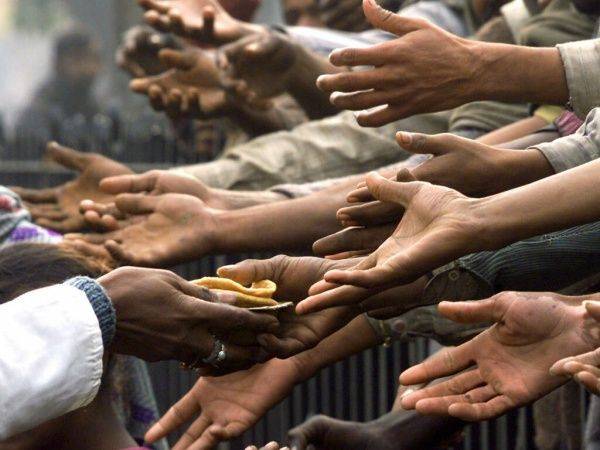
In the world's poorest nations, the cost-of-living problem is pushing an extra 71 million people into severe poverty, according to a new study from the U.N. Development Programme (UNDP) released on Thursday.
According to UNDP Administrator Achim Steiner, an examination of 159 developing nations revealed that Sub-Saharan Africa, the Balkans, Asia, and other regions are already feeling the effects of this year's spike in major commodity prices.
The UNDP demanded specific measures. It urged wealthy nations to broaden and expand the Debt Service Suspension Initiative (DSSI), which they established to aid poor countries during the COVID-19 epidemic, in order to provide direct financial transfers to the most needy.
Steiner said that the cost-of-living problem is pushing millions of people into famine and poverty at an alarming rate. "As a result, the risk of escalating societal instability rises every day."
There are several "poverty lines" maintained by organisations like the UN, World Bank, and International Monetary Fund, one of which is for the world's poorest nations, where the average daily income is $1.90 or less. a line of $3.20 per day for lower-middle-income economies and a line of $5.50 per day for upper-middle-income nations.
The present cost-of-living problem, according to the research, "may have driven almost 51 million more people into extreme poverty at $1.90 a day, and a further 20 million at $3.20 a day," bringing the total number of people living in poverty worldwide to just over 1.7 billion.
Governmental cash transfers that are specifically targeted would be more "equitable and economical" than general subsidies for items like food and electricity, it was stated. George Gray Molina, the UNDP's Head of Strategic Policy Engagement, argued that in the long run, these policies "promote inequality, further worsen the climate problem, and do not lessen the immediate hit."
The pandemic's previous two years have also demonstrated that these financially challenged nations would require assistance from the international community to finance these programmes.
They may do this, according to Molina, by expanding the G20-led Debt Service Suspension Initiative (DSSI) to at least 85 nations from the existing eligibility of 73.