


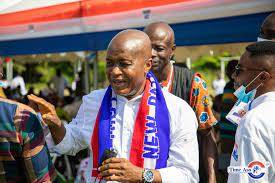
The Accra Sports Stadium will be the site of a gathering on Saturday for the Danquah- Busia- Dombo (DBD) tradition's four-year rite of choosing National Executives.
The decisions made at this meeting will be a deciding factor in determining whether the motto of "breaking the 8" will succeed or fail.
We have always chosen our leaders based on their commitment, competence, consistency, and political training, in accordance with history, convention, norms, and usages. In light of this, I feel forced to express my opinions on the chairmanship race with the "Krukudites" who follow me.
I want to make it clear that everyone of the seven applicants for the chairperson is deserving of the job. However, some are leagues ahead of their contemporaries, as in the phrase "Ahenfo Kyeneye, ebi deda ebi akyi."
APPRENTICESHIP AND LEADERSHIP IN POLITICS
It is a terrible spectacle to see people endorsing political viewpoints generally bragging about their degrees, from First to PhD, or other professional credentials. They never distinguish between "political" and "certified" stances. Although having a degree from an academic institution may be required, it could not be enough to succeed in politics.
Since politics is a vocation, the degree of apprenticeship is more important than anything else. To be prepared for all improbable events, one must go through the political mill.
I could make my case by quickly scanning the prior Chairmen of this tradition, focusing exclusively on the Fourth Republic. The likelihood of leading us with only a few exceptions increases with length of political apprenticeship.
via Opanin Yaw Baah
Our first Chairman was the late B. J. Da Rocha, who had previously served as the Progress Party's (PP) all-time Secretary General, the Popular Front Party's (PFP) Secretary General, and then the New Patriotic Party's (NPP) Chairman (NPP).
After carving out a position of leadership as Secretary General of Joe Appiah's Justice Party, the late Peter Ala Adjetey succeeded Da Rocha.
One of the exceptions to this is Odoi Sykes. But even here, devoted followers would concur with me that it is impossible to ignore the crucial role one of the greatest giants and his company performed for him.
Mr. Haruna Esseku, who had previously held the position of Central Regional Chairman, was appointed National Chairman in 2002. After learning the fundamentals of leadership while serving as the Western Regional Chairman, Mr. Mac Manu succeeded Haruna Esseku.
Paul Afoko falls into the category of exceptions as well. Any party supporter, though, can attest to the numerous elements that came into play at the Tamale congress.
After serving as First National Chairman and acting chairman, respectively, and helping us win the 2016 elections, Freddie Blay was finally elected again to the position of chairman.
Since he was chosen to serve as First National Vice Chairman from 2002 to 2006, Ntim has become well-known. He has never reflected on any party activities at any level.