


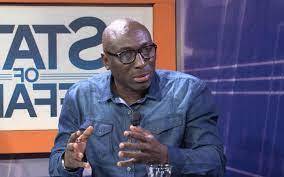
According to National Democratic Congress (NDC) member Abraham Amaliba, President Nana Addo Dankwa Akufo-Addo and Vice President Dr. Mahamudu Bawumia must admit that they have failed in handling the economy.
He urged the authorities to refrain from placing blame for the nation's present economic woes.
They fail to accept responsibility, Mr. Amaliba remarked on the New Day show with Johnnie Hughes on TV3 on Friday, July 15. The problems our nation is currently experiencing have always been a result of their activities.
He inquired, "Was it the NDC that requested them to borrow?" According to Dr. Bawumia, analysts who claim that Covid expenditure cannot be the sole cause of the rise in Ghana's governmental indebtedness are correct. Dr. Bawumia said that the government's payment for surplus electricity capacity as well as the effort to clean up the banking sector are other causes in the growing debt.
These were the words he used to defend the government's choice to seek assistance from the IMF. In his remarks at the Accra Business School IT program's launch on Thursday, July 14, he said that a total of US$17 billion had been spent to cover the cost of excess energy that Ghana did not require but had to pay for as a result of a contract the National Democratic Congress (NDC) administration had signed.
"Some observers and experts have suggested that the government's Covid 19 expenditure cannot possibly account for the rise in fiscal deficits and the stock of debt. In actuality, they are correct; Covid 19 costs by themselves were not the causes of Ghana's significant growth in debt stock by the end of 2021.
In reality, as I mentioned in my lecture on April 7, this year, in addition to Covid-19, there are two large expenditures that are essential to comprehending the development of the fiscal deficits and the debt stock. These two elements are the excess capacity payout for the energy industry and the cleaning of the financial sector.
The legacy of the take-or-pay contract, which burdened our economy with annual excess capacity costs of close to one billion US dollars, is what led to the excess capacity payment of 17 billion cedis. In essence, these were contracted to provide Ghana with energy in excess of our needs at the time. Whether we utilised the electricity or not, we had to pay for it.
The 7 billion cedi payment for gas that resulted from the signing of an off-take agreement for a set quantity of gas with ENI, Sankofa on a take-or-pay basis, which was far more than what we needed at the time, is included in the excess capacity payment of this 17 billion.