


Dr. Mahamudu Bawumia, the vice president, has been asked on to resign by an economist at the University of Ghana Business School (UGBS).
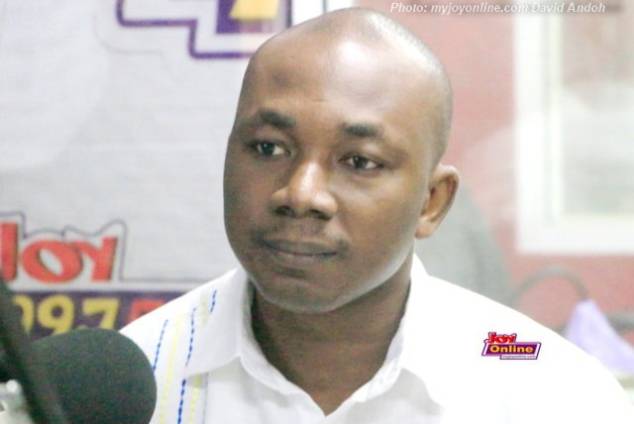
Prof. Godfred Alufa Bokpin asserts that it appears the Vice President does not have the power to influence or manage the operations of the Economic Management Team.
The economist urges him to "take the daring step" and quit in order to maintain his integrity because of this.
"I feel for the Vice President. We were informed that he serves as the face of the NPP's economic engineering machine. I think things may not be this way if he had more control," he remarked. "The vice president should quit if he is uneasy in his capacity as the chairman of the Economic Management Committee and feels powerless. The reason I'm thinking it will help him preserve his integrity is that it would be better for him. He must make the risky choice, the speaker said.
Following the Vice President's speech on Thursday, July 14, he made the remark on the Super Morning Show on Friday, July 15. In his speech at the Accra Business School, the vice president listed the four main reasons why the nation needed an IMF bailout.
He listed the primary contributing elements as the GH$17 billion energy sector excess capacity payments, the GH$25 billion banking sector clean-up effort, the GH$12 billion COVID-19 social interventions, the RU-U dispute, and rising fuel costs on the global market.
The Professor, however, thinks that other elements are also involved in the nation's economic problems.
"Since gaining our independence and joining the fund, we have never had the fortitude to acknowledge that we caused this to happen. We've been effective in starting a blame game. Therefore, throughout all of our trips to the fund, it is possible to spot both internal and external vulnerabilities, such as fraud, waste, and borrowing binge (for internal), as well as external elements.
He continued by saying that the country's repeated requests for assistance from the IMF were mostly caused by the failure of succeeding governments to put measures forth as part of the economic recovery plan following our previous withdrawal from the fund.
"We told the IMF and ourselves that we would carry out a number of measures that would prohibit us from returning to the fund as part of the departure terms. We had them written down and could articulate them to [the IMF officials], but ultimately we missed the intricacies and lost the lessons, he added.
"Forget it until we see actual moves, structural reforms, and reforms that increase productivity. Ghana would keep going to the IMF, he continued.