


After President Nana Addo Dankwa Akufo-Addo phoned Managing Director Kristalina Georgieva on July 1 to request an extended credit line for the country, a team from the International Monetary Fund (IMF) travelled to Ghana.
Ghana has requested assistance from the IMF 18 times. The group, under the direction of Carlo Sdralevich, arrived in Ghana on Tuesday, July 5, and began meetings the following day.
They met Ken Ofori-Atta, the sector minister, employees from the Ministry of Finance, and Vice President Dr. Mahamudu Bawumia.
The team also had meetings with the World Bank and UNICEF as well as the Finance Committee of the Parliament and representatives from civil society.
The Vice President discussed this situation for the first time and provided four justifications for Ghana's decision to seek IMF assistance. Using two internal and two external factors, he categorised his reasoning.
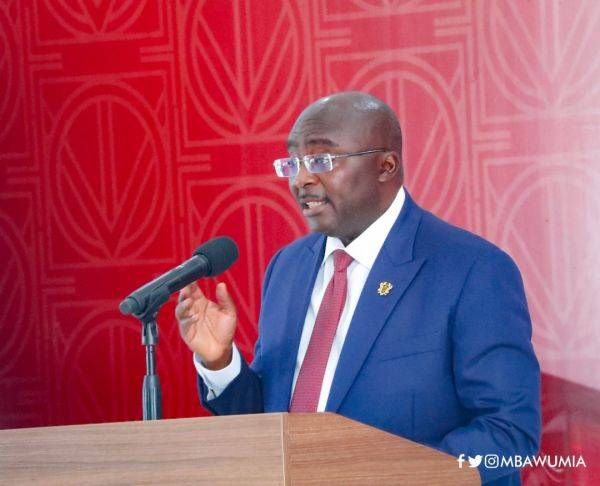
Dr. Bawumia stated that the "take or pay" arrangement in the energy sector and the banking sector clean-up are internal reasons in his remarks on Thursday, July 14 at the Accra Business School, Baatsona.
Then, he blamed COVID-19 and Russia's invasion of Ukraine as the external factors. This was supported by Carlo Sdralevich, the head of the IMF negotiation team, a day earlier in his initial evaluation of the Ghanaian economy.
"Ghana is experiencing a hard economic and social condition against an increasingly demanding global climate," Sdralevich stated. The COVID-19 epidemic has resulted in a dramatic worsening of the financial and debt crisis. Investors' worries have also led to credit rating downgrades, cash withdrawals, a lack of access to the external market, and domestic borrowing costs are rising.
Additionally, with little room for manoeuvre, Ghana is still recuperating from the Covid-19 pandemic shock and is being struck hard by the global economic shock brought on by the conflict in Ukraine. These unfavourable events have contributed to a slowdown in economic growth, an increase in unpaid debts, a significant depreciation of the currency rate, and a rise in inflation.
In line with the IMF's objectives, Sdralevich pledged "to help Ghana at this challenging moment."
Why Ghana sought assistance from the IMF
The Economic Management Team's Dr. Mahamudu Bawumia explained:
"Before I go, I'd want to use this chance to address a concern that many Ghanaians have: the government's choice to choose an IMF programme to stabilise the economy in the face of global difficulties (the COVID-19 pandemic and the Russia Ukraine War).
"A situation that has caused immense problems for Ghanaians by driving up the cost of almost everything, including petrol, bread, tomatoes, building supplies, and so forth. Ghana's fiscal and debt sustainability have gotten worse in the middle of this worldwide crisis.
"I should reiterate that Ghana has seen a quadruple whammy over the past several years, including the Russia-Ukraine war, COVID-19, excess capacity payments in the energy sector, and banking sector clean-up.
If the fiscal effects of this triple whammy are removed, Ghana won't need assistance from the IMF since the prognosis for its finances, debt, and balance of payments would be stable.
"Of the four variables, two—COVID-19 and the conflict between Russia and Ukraine—were caused by external events, while the other two—the cleaning up of the banking industry and the surplus capacity payments—were the outcome of earlier administration actions.
"Today, almost everywhere in the globe, gasoline costs are rising, food prices are rising, inflation is at an all-time high, currencies are depreciating, fiscal deficits are growing, debt levels are growing, etc. This indicates that the issue we are facing is a worldwide phenomena.
"Allow me to illustrate my idea with an analogy. Will you not hold the carpenter responsible if you hire him to roof your home and then, out of the blue, the roof falls without any wind or precipitation? But if a carpenter builds your house's roof and it collapses due to a tornado and a storm that has also blown away several houses' walls, windows, and roofs, will you hold the carpenter responsible?
"Some experts and journalists have suggested that COVID-19 expenses cannot account for the significant growth in the budget deficit and the stock of debt.
In actuality, they're correct. The significant rise in Ghana's debt stock towards the end of the project was not due only to COVID-19 expenses. In fact, as I mentioned in my lecture on April 7th, "there were two major expenditures that, in addition to COVID-19, are crucial to understanding the evolution of the fiscal deficit and the debt stock: the Banking Sector Clean up (GH25 billion) and the Energy Sector Excess Capacity Payments (GH7 billion)."
Dr. Bawumia pointed out that the GH17 billion in excess capacity payments are related to a history of take-or-pay contracts that imposed yearly excess capacity costs on our economy of around $1 billion. These basically had contracts to supply Ghana with electricity that was well in excess of what we needed, but we were still responsible for paying for it whether we used it or not.
According to him, the excess capacity payments include GH7 billion in gas payments from the previous administration's execution of an offtake arrangement with ENI Sankofa for a set quantity of gas on a take-or-pay basis that was far more than was required at the time. Failure to make the excess capacity payments on time would have meant a fresh outbreak of dumsor for the nation.
"As a result of the banking sector's poor management, we too had a banking crisis. If Ghana's banking system had not been dealt with swiftly, the economy would have suffered tremendously and millions of people's money would have been lost.
According to the vice president, direct COVID-19 spending was GH12.0 billion, which was split into GH8.1 billion in 2020 and GH3.9 billion in 2021.
According to the data, which was borrowed, the three expenditures totaled GH54.0 billion (about $7.0 billion), according to him.
According to the Ministry of Finance, GH 8.5 billion would be paid in interest yearly for these three goods. This amounts to almost 23% of Ghana's GH37 billion in yearly interest payments.
It's important to compare the total expenditure (releases) for these three items to those for some of the government's major flagship initiatives, such as Free SHS, One District, One Factory, Planting for Food and Jobs, Development Authorities, Ghanacard, in order to put the expenditure on these three items in perspective.
According to the statistics, GH 15.62 billion was spent on these important flagship initiatives throughout the five-year period between 2017 and 2021, as opposed to GH 54.0 billion on the three special items.
Over a five-year period, the spending on the three extraordinary items was more than three times that of the flagship initiatives, he said.
Vice President Bawumia stated that the government has begun executing a policy that provides the Bank of Ghana (BoG) the power to acquire any amount of gold mining in Ghana as part of steps in preparing to stabilise the economy in the future.
In the end, when we have enough gold, we can back our currency and future borrowing with gold. Long-term cedi stability will result from this, according to Dr. Bawumia. In order to further the gold purchase programme the BoG initiated to increase the nation's reserves, the vice president claimed that the first right of refusal granted to the BoG to acquire gold mined in the nation was supported by law.
He was outlining the factors that compelled the nation to engage in discussions with the International Monetary Fund (IMF) and the steps indicated to change the economy and make it shock-resistant.