


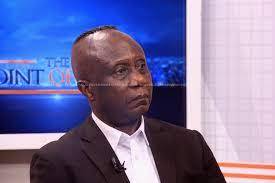
The administration is presently experiencing certain credibility problems, according to Dr. John Kwakye, director of research at the Institute of Economic Affairs (IEA).
This, he claimed, comes as a result of the government abruptly changing its position and turning to the International Monetary Fund (IMF) for assistance after promising all Ghanaians that it would not do so.
On Friday, July 1, the administration declared that it would be seeking assistance from the Fund. To meet with government officials, the IMF delegation headed by Carlo Sdralevich entered the nation on July 6. The group's tour came to an end on Wednesday, July 13.
They had meetings with the Governor of the Bank of Ghana, Ernest Addison, Vice President Dr. Mahamudu Bawumia, and Finance Minister Ken Ofori-Atta. In order to discuss social expenditures, they also met with the Finance Committee of the Parliament, civil society groups, and development partners including UNICEF and the World Bank.
Mr. Sdralevich made the following remark upon the mission's conclusion: "Ghana is dealing with a severe economic and social condition amidst an increasingly demanding global climate. The COVID-19 epidemic has resulted in a dramatic worsening of the financial and debt crisis. Investors' worries have also led to credit rating downgrades, capital outflows, a loss of access to external markets, and an increase in domestic borrowing prices.
Furthermore, Ghana is experiencing a restricted amount of leeway for manoeuvring as a result of the Covid-19 pandemic shock and the global economic shock brought on by the conflict in Ukraine. These unfavourable events have contributed to a slowdown in economic growth, an increase in unpaid debts, a significant depreciation of the currency rate, and a rise in inflation.
Initial negotiations on a comprehensive reform plan to reestablish macroeconomic stability and establish debt sustainability were held by the IMF team. The group made strides in determining the short-term policy priorities and the economic situation. The discussions concentrated on ensuring the credibility of the monetary policy and exchange rate regimes, protecting financial sector stability, and designing reforms to boost growth, create jobs, and strengthen governance. They also ensured that fiscal balances were improved in a sustainable manner while safeguarding the weak and vulnerable.
"IMF officials will continue to closely monitor the economic and social environment and interact with the government on the formulation in the coming weeks." This will enable them of their Enhanced Domestic Program that may be backed by an IMF agreement and with extensive stakeholder participation
"We reiterate our dedication to helping Ghana through this trying moment in accordance with IMF policy.
"Staff express their appreciation to the government, civil society, and development partners for their positive involvement and support throughout the mission."
The impact of the ongoing Russia-Ukraine conflict and the Covid-19 was cited by Vice President Dr. Mahamudu Bawumia, who is also the head of the economic management team, as the reason for Ghana's decision to approach the IMF during a public speech at the Accra Business School IT program's launch on Thursday, July 14.
"Some observers and experts have suggested that the government's Covid 19 expenditure cannot possibly account for the rise in fiscal deficits and the stock of debt. In actuality, they are correct; Covid 19 costs by themselves were not the causes of Ghana's significant growth in debt stock by the end of 2021.
In reality, as I mentioned in my lecture on April 7, this year, in addition to Covid-19, there are two large expenditures that are essential to comprehending the development of the fiscal deficits and the debt stock. These two elements are the excess capacity payout for the energy industry and the cleaning of the financial sector.
The legacy of the take-or-pay contract, which burdened our economy with annual excess capacity costs of close to one billion US dollars, is what led to the excess capacity payment of 17 billion cedis. In essence, these were contracted to provide Ghana with energy in excess of our needs at the time. Whether we utilised the electricity or not, we had to pay for it.
The 7 billion cedi payment for gas that resulted from the signing of an off-take agreement for a set quantity of gas with ENI, Sankofa on a take-or-pay basis, which was far more than what we needed at the time, is included in the excess capacity payment of this 17 billion.
"Food and energy costs rose internationally during the Russia-Ukraine war," the speaker continued. Inflation hit 30 and 40 year highs in several advanced nations. "In June 2022, Ghana's inflation climbed to 29.8%, there were disruptions, shipping costs increased by over 1,000%, and economic development slowed down," he remarked at the Thursday opening of the Accra Business School IT programme.