

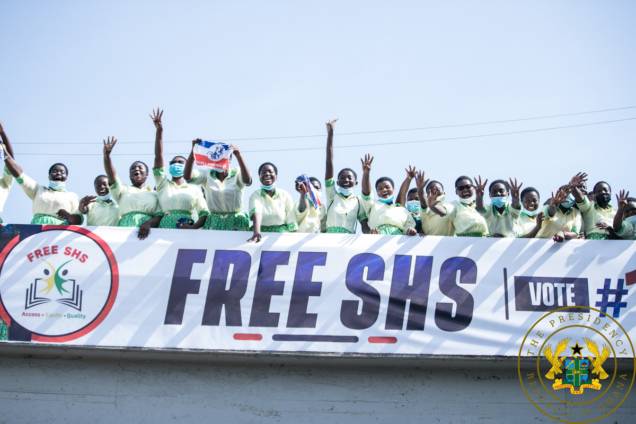
According to Kofi Asare, Executive Director of Eduwatch Africa, the government spends 70% of the money allotted for Free SHS on food.
He claims that every year, between $1.3 and $1.4 billion is spent on feeding pupils at Free SHS. According to him, this is one of the contributing factors to the present food supply issues that the schools are facing.
He said, "Out of the 2.3 billion, eating alone is around 70% of the cost. There are other components of the bill, such as uniforms, school supplies, exercise books, etc.
He said that there are liquidity issues as a result of the significant amount utilised for feeding in an interview on JoyNews' Newsfile on Saturday.
While financial delays are manageable, those impacting feeding are more more difficult to control because of the Children live in boarding houses. Therefore, suppliers who claim their monies have been held up as a result of the financing delay have complained; some claim they are due money from as far back as September last year, he said.
In order to save the government money to help with the present food shortages, Kofi Asare advised that parents of junior high school students attending private institutions be permitted to pay for their children's tuition.
"If we ask parents of private junior high school students to pay their free senior high school fees, the average free senior high school fee government is paying is GHC1,500 for a whole year, so if we have these parents who came from the private sector to pay their GHC1,500 for a whole year as Free SHS school fees, what would happen is that the government will save GHC520m to support what we are currently unable to afford, he said.
He said that "we can cut certain expenditures and yet preserve the value of the programme (Free SHS) to guarantee that the poor, disadvantaged, and vulnerable are not denied secondary school on the basis of fees," and that the government should investigate cost optimization.