


Comparison of Sugar (Fructose) in Fruit
If you are wondering how much sugar (fructose) is in the fruit you eat every day, take a look at the following table:
Type of Fruit Sugar Amount per 100 Grams ( Approximately )
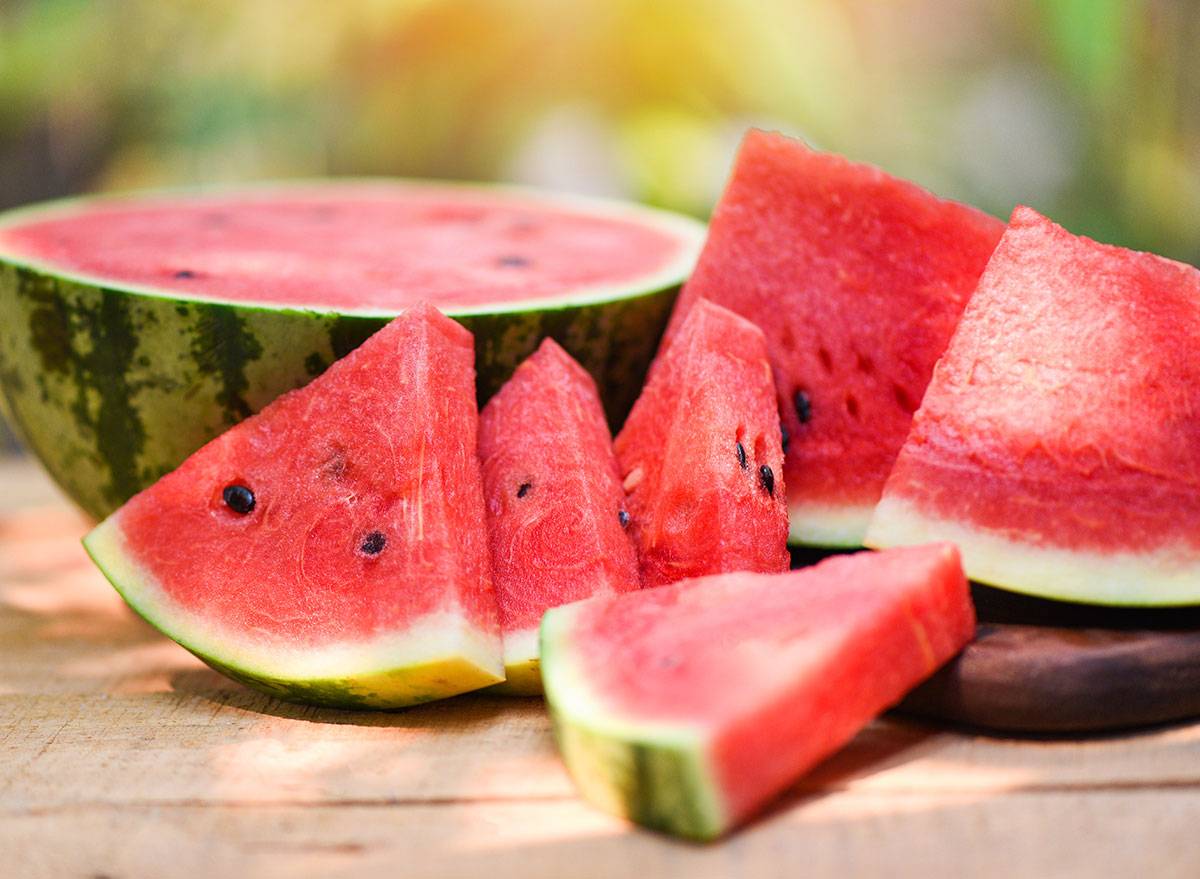
watermelon 7 grams
blueberries 4 grams
peaches 8 grams
apples 10 grams
pears 9 grams
kiwi 9 grams
cherries 13 grams
pineapple 9 grams
plums 10 grams
bananas 12 grams
mango 15 grams
oranges 9 grams
grapes 16 grams
Figs 16 grams
Grapefruit 7 grams
If you start to feel overwhelmed when you read about the sugar content in commonly enjoyed fruits, remember that sugar is naturally occurring fructose. While natural fructose should be enjoyed in moderation, it's important to understand that a piece of fruit is always far healthier than a candy bar or popsicle that contains processed sugar.
Health Benefits of Watermelon
Having established that the sugars found in watermelons are natural and can be consumed in moderation, the benefits of eating watermelons far outweigh any negative aspects (like the sugar content). For starters, the antioxidant lycopene, which is responsible for giving watermelon its red color, has been linked to a reduced risk of stroke and lower blood pressure. Additionally, some research shows a link between the lycopene found in watermelon and lower cancer rates.If you're health conscious, you'll be glad to know that watermelon is a fat-free fruit. Not only is watermelon fat-free, but it's also 90% water, making it a perfect pre-workout or post-workout treat. If you follow guidelines 3 and 5, adding watermelon to any of your three fruits can provide your body with vitamins and minerals.
When you eat 1 cup of diced watermelon, you are unknowingly replenishing your body with 12.3 mg of vitamin C, vitamin A, calcium, magnesium, phosphorus and folic acid.The vitamin C found in watermelon has links to reducing asthma, the fiber promotes a healthy digestive tract, the high amount of water keeps you hydrated and the vitamin A moisturizes your skin and hair.