


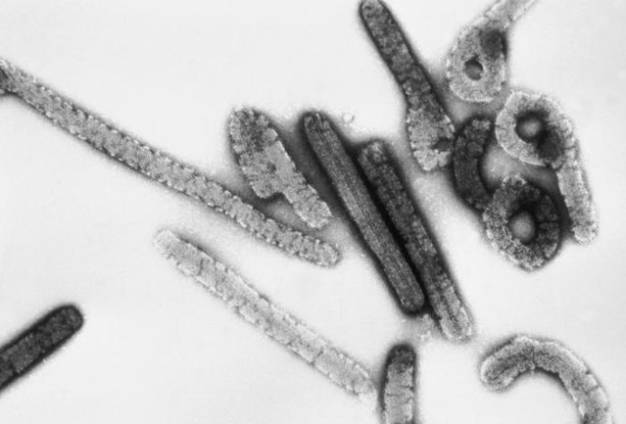
The Marburg Virus Disease is present in Ghana, according to the Ghana Health Service (GHS). The sickness has never before affected the general population, according to the Service.
The GHS noted in a statement that was released on Saturday, July 16, that the virus's existence had been verified through a series of tests.
Following the report of the preliminary finding of two cases of Marburg Virus Disease (MVD) from the Ashanti Region on July 7, 2022, the Ghana Health Service (GHS) wishes to announce that additional testing at the Institute Pasteur in Dakar (IPD), Senegal, has confirmed the preliminary findings. The statement was signed by the Director-General of the Ghana Health Service, Dr. Patrick Kuma-Aboagye.
This is the first time Ghana has verified Marburg Virus Disease, thus the samples were transferred to IPD with the cooperation of the World Health Organization (WHO) for validation in accordance with best practises.

The disease was suspected after two people were found who fit the criteria for an acute hemorrhagic fever and who had been reported in the Adansi North District of the Ashanti Region, the statement stated.
The Ashanti and Savannah Regional Health Directorates of the Ghana Health Service are now monitoring 98 contacts that have been identified, including those from Sawla-Tuna-Kalba area in Savannah Region. There are no more known MVD cases.
The Ghana Health Service has pledged that it is working with all pertinent organisations to protect residents from this most recent development.
According to the Service, one of the steps to stop a spread is to "isolate any recognised contacts, including physicians and other healthcare professionals."

"Contact tracing has been enhanced with the identification of new contacts being followed up for the maximum incubation period of 21 days following the confirmation of the cases," it was further said.
Several contacts have been monitored for 19 days, but none of them have shown any symptoms.
In addition, the Noguchi Memorial Institute for Medical Research randomly chose thirteen (13) of the contacts and evaluated them. Marburg Virus testing was negative for all 13 contacts.
The Ghana Health Service added that "community activities are bolstered through the participation of community-based surveillance volunteers who serve as eyes and ears for the health system and who will report any unexpected events to the Ghana Health Service for further action." Additionally, it was disclosed that logistics, such as "Personal Protection Equipment has been delivered to the impacted areas should the need arise," had been provided in response to this development.
Information on the Illness
The GHS stated that fruit bats are the virus's natural hosts and that humans and non-human primates are also susceptible to the rare but severe haemorrhagic fever produced by the Marburg virus.
The Marburg virus transmits between humans by direct contact with bodily fluids, blood, and other discharges from the infected person or animal. It is transferred to humans from animals.
The illness takes two (2) to twenty-one (21) days to incubate. Treatment focuses on symptoms.
Bloody urine, fever, bloody diarrhoea, bleeding from the gums, bleeding into the skin, bleeding into the eyes, and bleeding into the skin are all symptoms of MVD.
The Ghana Health Service has prevention advice.
The Ghana Health Service stated that in order to reduce the risk of infection:
On direct contact with blood and other bodily fluids, such as bat faeces, the Marburg virus illness can spread from infected animals like bats.
By avoiding exposure to mines or caves where fruit bat colonies are found, the danger of bat-to-human transmission can be decreased. Prior to eating, all animal products, including meat and blood, should be fully prepared. There is no vaccination on the market right now.
Therefore, it is recommended that the public stay away from these creatures. Additionally, an infected individual can infect another person and get the Marburg virus sickness.
The general public is thus encouraged to steer clear of direct contact with anyone exhibiting the aforementioned symptoms and to encourage them to go to the nearest medical facility for the necessary evaluation.