


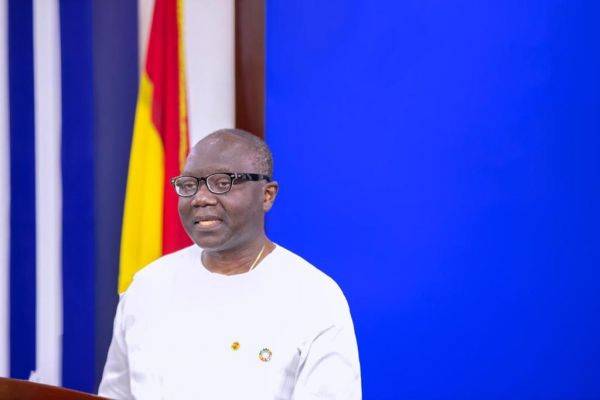
According to Ken Ofori-Atta, the minister of finance, the nation lost roughly GH27 billion as a result of tax breaks given to select companies between 2008 and 2020.
The amount equates to around GH2.2 billion in tax exemptions given up over the course of a 12-year period.
Speaking to Parliament on Friday, the Finance Minister added that since 2008, the lost revenue has only gradually decreased to roughly GH1.8 billion by 2020.
It is accurate—as the Ranking Member noted—that tax exemptions cost the country around GH27 billion.
"This emphasizes how important it is for all of us to safeguard the public purse. We lose money in various ways, so that social re-engineering is crucial for us, he added.
However, Mr. Ofori-Atta continued, "for this year, Ghana would probably save some money on tax exemptions of GH460 million."
Motion
After Abena Osei-Asare, a deputy minister of finance, moved for the Tax Exemptions Bill, 2020 to be read a second time, the minister gave her confirmation.
When enacted, the measure, which the Finance Committee discussed under a certificate of urgency, will establish precise qualifying requirements for tax exemptions and provide provisions for the oversight, assessment, and enforcement of exemptions.
Additionally, it would provide a regulatory framework for tax exemption monitoring to guarantee that granted exemptions are used for their intended purposes and to prevent misuse of the current exemption system.
Abuse
Dr. Cassiel Ato Forson, the ranking member of the finance committee, backed the proposal but voiced concern that the tax exemption system in the nation had been "abused, was too generous, and had never been controlled over the years."
He said that as a result, the nation had lost a significant amount of income and that it was now necessary for Parliament to control the scope of tax exemptions that may be given.
He explained to the House that he had privately requested Ghana Revenue Authority (GRA) officials to compile for him the tax exemptions that the nation had granted from 2008 to the present in order to provide the committee with information on how much the tax exemption regime had cost. This was done during the committee's consideration of the bill.
"Mr. Speaker, I was surprised to learn that, as of today, Ghana has awarded tax exemptions totaling over GH27 billion, according to preliminary statistics from the GRA.
The GRA will be able to produce precise accounting for the customs taxes for which we grant tax exemptions, but it will be challenging for it to do so for indirect taxes and direct taxes, according to Dr. Forson.
"We were informed that over the period, we gave tax exemptions totaling GH15.5 billion for customs duties alone," he continued.
Additionally, the Ajumako-Enyan-Essiam National Democratic Congress (NDC) representative informed the House that within the same period, Parliament awarded indirect tax exemptions of GH6.1 billion and GH1.7 billion for direct taxes.
"Mr. Speaker, when I questioned the GRA officials about why direct and indirect taxes were so low, they said that they lacked a system to fully collect all of the tax exemptions they had given.
This is why, according to Dr. Forson, "I think the moment has come for us to confront the problem of tax exemptions."
Impacts
The Majority Leader, Osei Kyei-Mensah-Bonsu, weighed in on the topic by stating that if the GH27 billion the nation awarded in tax forfeiture were dollar-rated from 2008 to the present, Ghana would have lost at least GH50 billion.
Mr. Speaker, if we had even a third of that money today, we wouldn't be discussing re-engaging with the International Monetary Fund (IMF), and so it is. Regarding the effect such tax exemptions had on the economy, Mr. Kyei-Mensah-Bonsu stated that the Finance Committee was required to inform the House of the effects of any tax exemptions it received from Parliament.
The chairman replied, "The committee has never done that, and that is why we are proposing in the new Standing Order a new committee on the economy that would deal with such things.