


 The Monetary Policy Committee (MPC)?of the Bank of Ghana has increased the rate at which it lends to other banks from 27 per cent to 28 per cent, the highest in more than 20 years.
This means that when banks borrow from the central bank at a higher cost, they will equally increase the interest rates on loans to individuals and corporate bodies.
It is expected to ultimately affect the ability to purchase goods and services and, hence, douse inflationary pressures.
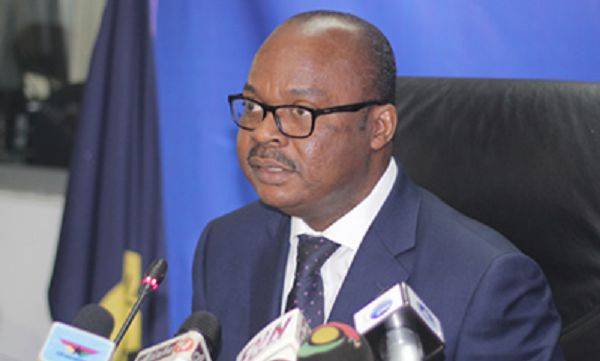
At a press conference in Accra yesterday to brief the public about monetary activities over the last quarter of last year, the Governor of the Bank of Ghana, Dr Ernest Addison, said the increase in the policy rate would help restore fiscal and debt sustainability and bring down inflation as well as help stabilise the currency which depreciated by over 30 per cent in 2022.
“This is to help drive inflation on a downward path,” Dr Addison said.
The latest announcement adds 13.5 percentage points of increments since November 2021 and represents the MPC’s steepest-ever phase of interest rate hikes since 2003.
According to the January 2023 Summary of Economic and Financial Data, average lending rate increments since last year was equivalent to 2.82 per cent interest rate on loans per month.
Already, the average lending rates of banks have jumped from 33.87 per cent in November last year to 35.58 per cent in December last year.
Dr Addison also said underlying inflationary pressures similarly remained high as the bank’s core inflation measure, which excluded energy and utility, accelerated to 53.2 per cent in December 2022, from 49.7 per cent in November.
Staff level agreement
Ghana reached a staff-level agreement with the International Monetary Fund (IMF) in December, last year for a $3 billion bailout to address deteriorating public finances and implementing some measures to contain expenditure cuts this year for a final IMF board approval.
The cedi has depreciated by more than a quarter against the dollar since the country suspended interest payments on its external debt in December last year. The move caught bondholders by surprise ahead of talks on restructuring the nation’s loans.
“We are confident that by the end of the first quarter we should be able to get a disbursement from the IMF to help augment the foreign-exchange resources of the central bank,” Dr Addison said.
Cost of living
The development has been compounded by rising cost of living, collapse of businesses and Ghana’s decision to turn to the IMF for a financial bailout.
The Staff-Level Agreement has a precondition for the government to restructure its domestic creditor approval for a debt restructuring programme, at the country’s own volition. The government has announced a Domestic Debt Exchange Programme for bondholders to voluntarily submit their existing bonds for new ones, which have lower interest rates and longer tenors.
It is targeting approximately GH¢137.3 billion of principal.